
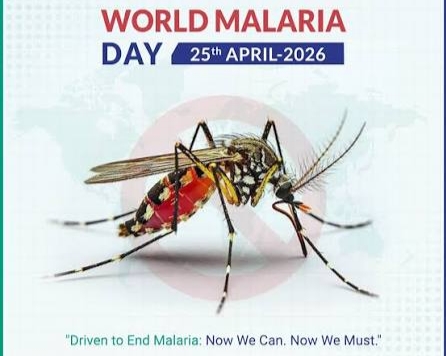
On April 25, the world once again marks World Malaria Day, but in 2026, the observance carries a deeper weight. The theme, “Driven to End Malaria: Now We Can. Now We Must.” is not just a slogan; it reflects a defining moment in global health. For decades, malaria has been both preventable and treatable, yet it continues to thrive in some of the most vulnerable parts of the world. This year’s theme forces a difficult but necessary reflection: if the world already has the tools to end malaria, why does it still kill hundreds of thousands every year?
The global picture tells a story of both progress and persistence. According to the World Health Organization, there were an estimated 282 million malaria cases and about 610,000 deaths in 2024, an increase of nearly 9 million cases compared to the previous year. These figures highlight a troubling slowdown in progress, especially when placed against the remarkable gains achieved since 2000, when over 2.3 billion cases and 14 million deaths were prevented globally through sustained interventions.
Yet, despite these gains, the disease remains deeply entrenched, particularly in sub-Saharan Africa, which accounts for about 94–95% of global malaria cases and deaths. The burden is not evenly shared it is concentrated among the poorest, the youngest, and those with the least access to healthcare. Children under five years old alone account for the majority of malaria deaths in Africa, making the disease not just a health crisis, but a humanitarian one.
In Africa, malaria is more than a disease it is a systemic challenge intertwined with poverty, climate, and fragile health systems. Data from continental reports show that over 270 million cases and nearly 600,000 deaths occurred across African Union member states in 2024 alone, underscoring how disproportionately the continent carries the global burden. The reasons are complex. Climate change is expanding mosquito breeding conditions, conflicts are disrupting healthcare delivery, and rapid population growth is increasing the number of people at risk. At the same time, the emergence of drug and insecticide resistance threatens to undermine decades of progress, raising fears of a potential resurgence if urgent action is not taken.
At the center of this crisis lies Nigeria, which continues to bear the heaviest malaria burden globally. The country accounts for approximately 24–27% of global malaria cases and over 30% of deaths, making it the single largest contributor to the disease worldwide. In 2024 alone, Nigeria recorded an estimated 68 million cases and nearly 185,000 deaths, a staggering figure that reflects both the scale of transmission and the strain on the health system.
Even more striking is the level of exposure about 97% of Nigeria’s population is at risk of malaria infection, meaning that for most Nigerians, malaria is not an occasional threat but a constant reality. Recent national statistics further reveal that between January and September 2025, over 24.4 million confirmed cases were recorded, highlighting how relentless the disease remains despite ongoing interventions.
But beyond the numbers are the human and economic costs. In Nigeria, malaria is responsible for a significant proportion of hospital visits, child deaths, and maternal health complications, draining household incomes and weakening productivity. For many families, especially in rural communities, malaria is a recurring expense – money spent on treatment, transportation, and lost workdays. This creates a cycle where poverty fuels malaria, and malaria deepens poverty. It is this cycle that global health experts are now urgently trying to break.
Despite these daunting challenges, there are important reasons for hope and this is where the first half of the 2026 theme, “Now We Can,” becomes meaningful. Scientific innovation has transformed the fight against malaria in recent years. New-generation insecticide-treated nets, improved diagnostic tools, and more effective treatments are already saving lives. Notably, malaria vaccines once considered a distant possibility are now being rolled out across several African countries.
In Nigeria, pilot programmes have begun in states like Kebbi and Bayelsa, targeting children who are most at risk. Across Africa, millions of vaccine doses have already been distributed, alongside expanded seasonal malaria prevention programmes reaching tens of millions of children annually. These developments signal a turning point: for the first time, elimination is not just theoretical; it is technically achievable.
However, the second half of the theme “Now We Must”is where the real challenge lies. The existence of tools does not guarantee their use. One of the biggest barriers to malaria elimination today is funding. Global investment in malaria control remains far below what is needed, with billions of dollars in funding gaps threatening to stall or reverse progress. Without sustained financing, even the most effective tools cannot reach the communities that need them most. In addition, weak health systems, limited access to care, and gaps in public awareness continue to hinder progress, particularly in rural and underserved areas.
There is also a growing recognition that malaria elimination cannot rely solely on medical interventions. Environmental management, improved housing, sanitation, and community education all play critical roles in reducing transmission. Simple measures like eliminating stagnant water, using treated mosquito nets, and seeking early treatment remain some of the most effective defenses against the disease. Yet, these measures require consistent public engagement and government commitment to succeed at scale.
World Malaria Day 2026, therefore, is more than a commemoration it is a call to action grounded in evidence and urgency. It challenges leaders to invest more, health systems to deliver better, and communities to stay informed and proactive. It also highlights the need for global solidarity, because malaria is not just a local problem it is a shared global responsibility.
As the world reflects on the theme “Driven to End Malaria: Now We Can. Now We Must,” the message is clear: the fight against malaria is at a crossroads. The tools exist. The knowledge is available. The progress, though uneven, is undeniable. What remains uncertain is whether the world will act with the speed and commitment required to turn possibility into reality.
✍️: Precious Nwonu