Home Blog Page 30

Ijebu Youths Partner with Senator Gbenga Daniel on Community Development Initiative

0

…as Ex-Governor calls for unity between Ijebu and Remo over state creation

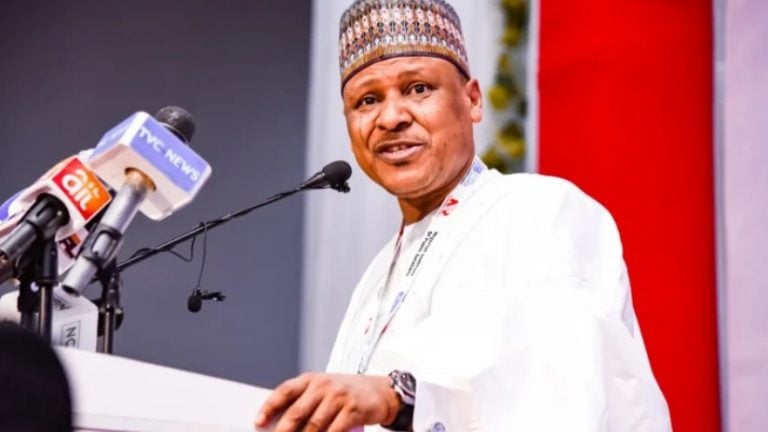
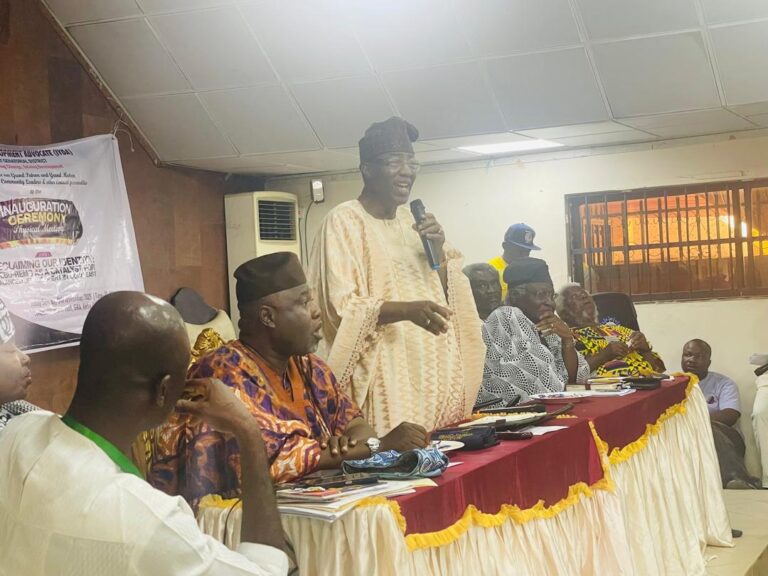
It was a double gathering of youths and community stakeholders in Ijebuland on Sunday as members of the All Progressives Congress (APC), the Ijebu Youth Development Advocate (IYDA), and the Ikangba Housing Estate Community Residents’ Association (IHECRA) met with the Senator representing Ogun East Senatorial District, Otunba Gbenga Daniel, to discuss community development initiatives.

The event, held at Obalofin Hall, GRA Ijebu-Ode, was themed “Reclaiming Our Identity: Ijebu-Remo as a Catalyst for Balanced Development in Ogun East.” It featured the inauguration of new executives of the Ikangba Housing Estate Development Association, presentation of awards, and a series of welfare programmes supported by the Gateway Front Foundation, including free medical tests, eye screening, distribution of eyeglasses, and support for widows and the elderly.

In his remarks, Senator Daniel reaffirmed his commitment to the creation of Ijebu-Remo State, describing the process as “a long but achievable journey” that requires unity between the Ijebu and Remo people.

“Creating a state out of the existing one is not a day’s dream. All hands must be on deck to deliberate more. Ijebus and Remos must unite with one voice to achieve this dream,” Daniel said.

He emphasized that unlike the military era, state creation in a democratic setting requires wide consultations, discussions, and legislative processes.

“We have competitors who share similar aspirations. We were all at Ibadan during the inauguration of Oba Rasheed Adewolu, where the monarch congratulated the President in anticipation of a new state. This shows others are already making moves. Ijebus and Remos must therefore stand together to ensure our dream is not hijacked,” he added.

Daniel further explained that any bill for state creation must go through debates and arguments before approval, reiterating that Ijebu remains the only old province yet to be granted statehood.

“The Ijebu-Remo area comprises nine local governments, not six as often assumed. Hence, both zones must collaborate to make the Ijebu-Remo State dream a reality,” he said.

Speaking with journalists, Mr. Daniyan Adetayo, Convener of the Ijebu Youth Development Advocate (IYDA), said the gathering aimed to sensitize people on the need for unity in the agitation for Ijebu-Remo State.

“We are here to remind our people not to let politics derail our long-standing vision. Unity will bring faster development if the state is created. We are consulting market women, royal fathers, and religious leaders to ensure a common voice,” Adetayo stated.

During his visit to the Ikangba Housing Estate, Senator Daniel also addressed the community’s request for road construction. He urged them to first engage the Ministry of Town Planning and Housing Corporation for necessary approvals before seeking his legislative intervention.

“Once proper approvals are obtained, we can incorporate the project into our constituency development plans,” Daniel assured.

The senator also awarded scholarships to two children from the community and donated N2 million towards the estate’s development. Several elderly residents also benefited from free eyeglasses and medical gifts.

In his report, the Association’s General Secretary, Mr. Daniyan Adetayo, highlighted key achievements of the outgoing executive committee, including improvements in electricity supply, installation of meters, enhanced security, construction of gates and fences, maintenance of roads and drainages, clearing of bushes, and installation of streetlights.

He expressed confidence that the lessons learned over the past four years would guide the new leadership toward even greater progress.

The well attended event had in attendance Oba Adesanya, the Olisa of Ijebu-Ode, Hon. Olufemi Ogunbanwo who was represented at the event, Hon. Lukman Adeleye, Minority Leader of the Ogun State House of Assembly also supported the community with the sum of N250,000 and several other dignitaries and community leaders were at the event.

  • Story from NUJ Ogun-East Independent Chapel

Prince Olawunmi Says Awujale Succession Must Follow Customary Law and Ijebu Tradition

0

Prince Samuel Olawunmi, the Assistant Secretary of the four Ruling Houses of the Awujale (Idile Oba Merin Awujale) and Anikinaiya Ruling House, the family that produced the late Awujale of Ijebuland, Oba S.K. Adetona has appealed to Ijebu kingmakers not to violate customary law and the kingdom’s rich culture and traditions in the selection of the next Awujale of Ijebuland.

Prince Olawunmi, popularly known as Anikinaiya, emphasized that wealth or social connections should not determine who becomes the next Awujale, insisting that the late Oba Adetona himself had earlier warned against such tendencies.

Speaking during a conversation with journalists on Friday in Ijebu-Ode regarding his recent social media posts, Prince Olawunmi reiterated that Ijebu tradition does not favour candidates chosen based on influence or affluence. He cited historical records from the National Archives showing that past Awujales were selected strictly through traditional customs.

“Historically, former Awujales were ordinary Ijebu citizens with regular professions like hunter, herbalist, native doctor, barber, and even student.  For example, Awujale Sikiru Adetona was an undergraduate student before ascending the throne. This example shows that the Awujale stool has always been occupied by men from various walks of life, without regard to wealth, power, or influence,” he said.

Prince Olawunmi further cautioned against any attempt to exclude other ruling houses from the succession process. “The Awujale stool belongs to the four ruling houses of Ijebu-Ode, not just the Fusengbuwa Ruling House. While it is true that Fusengbuwa has the turn to present candidates at this time, that right does not override Ijebuland’s customary laws, customs, and traditions,” he stressed.

Commenting on the lasting impact of late Prince Adebisi Fasasi Adeyemi, or Obanlefa of the Fusengbuwa Ruling House, Prince Olawunmi highlighted that Obanlefa’s 25-year period as the family’s Olori-Ebi (head) stands as a universally accepted and irrefutable fact within Ijebu history.

“Obanlefa’s era solidified the existing unity amongst the four Ruling Houses of the Awujale (Idile Oba Merin). The four Ruling Houses as children of the same ancestral father in the first Awujale, hold meetings on regular basis since time immemorial. The current Head of the four Ruling Houses, Alhaji Toheeb Alaga who doubles as the Head of the Anikinaiya Ruling House has been a rallying point for this harmony, love and unity being enjoyed in the Awujale of Ijebuland Ruling Houses.”

“As a young prince growing up with my uncles, late Pa. Abdul-Kafar Bifajoko Olowu and late Prince (Dr) Adebola Sanya, the then Family Head (Olori-Ebi) and Secretary of Oba Anikinaiya Ruling House respectively, I knew the late Prince Fasasi Adebisi Adeyemi, known as Obanlefa, the great-grandson of Olufadekemi, also called Olufadi, the eldest male Abidagba of Awujale Fusengbuwa.

“Descendants from the eight units (Idi Igi meejo) of Fusengbuwa Ruling House known to the four Ruling Houses of the Awujale represent a direct continuation of formally recognized heirs of the Awujale Fusengbuwa. Their legitimacy is rooted in hereditary succession and the enduring values of stability, legacy, and cultural legitimacy,” he said.

Speaking further on the legal framework guiding the Awujale selection process, Prince Olawunmi referenced the declaration made under Section 4(2) of the 1957 Chiefs Law, which governs the succession of the Awujale of Ijebuland.

According to him, the customary law stipulates that the stool be filled by the rightful male descendants of the Abidagba Okunrin line, while male descendants from the Abidagba Obirin and Abidoye lines are also considered in that order.

“The 2021 Obas and Chiefs’ Law of Ogun State reinforces this established legal precedent, mandating that both the leaders proposing candidates in the Fusengbuwa Ruling House and the Ijebu Kingmakers selecting the next Awujale of Ijebu land to meticulously observe the 1957 Chiefs Law to safeguard our cherished traditional institution from irreversible harm.”

Prince Olawunmi urged the Fusengbuwa Ruling House and the kingmakers to focus on unity and continuity during this crucial period of royal transition. He emphasized that the legitimacy of any candidate must be based on traceable lineage and adherence to Ijebu customs.

“I urge our elders in the Fusengbuwa Ruling House and the kingmakers to remain guided by fairness and historical truth as they work to correct past injustices.”

“Leaders like Alhaji Lateef Owoyemi, Prince Adedokun Ajidagba and others should follow the noble example of late Baba Obanlefa in upholding the integrity of the royal house during the process of selecting the next Awujale of Ijebuland and ensure that the Fusengbuwa Ruling House remain an indivisible entity worthy of emulation” he concluded.

ASUU Refutes Federal Government’s Claim of ₦50bn Payment

0

The Academic Staff Union of Universities (ASUU) has denied receiving the N50bn revitalisation fund the Federal Government recently claimed to have released, insisting that none of its demands has been met ahead of its National Executive Council meeting scheduled for November 8 and 9, 2025.

ASUU made this known in a statement on Wednesday signed by Prof. Jurbe Molwus, who recalled that the union suspended its two-week warning strike in good faith following assurances from senior government officials that concrete proposals would soon be presented.

“As ASUU mobilises for its National Executive Council meeting scheduled to hold on the 8th and 9th of November, 2025, we expect that some of the outstanding entitlements such as 3.5 months withheld salaries, 25/35% wage award arrears, promotion arrears, unpaid salaries of some members, etc., would have been paid to university workers by now. But all we get are press releases by the Honourable Minister of Education. What we need are credit alerts, not misleading statements,” the statement read.

Molwus said the Federal Government’s recent announcement of a N50bn disbursement had not translated into actual payment to universities.

“It is sad to further note that even the N50bn revitalisation fund the Federal Government claimed to have released some weeks ago is yet to reach the universities. We do not know why the Minister of Education is still keeping it,” he said.

The ASUU leader also faulted comments by the Minister of Education, Dr. Tunji Alausa, who claimed that N2.3bn had been released to settle salary and promotion arrears.

“Again, the Honourable Minister of Education, Dr. Tunji Maruf Alausa, was quoted to have said in a recent release that ‘The FG has released N2.3bn to clear salary and promotion arrears in all federal universities.’

“But, as we speak right now, university workers have yet to receive any such alerts. So, the minister’s claim of clearing backlog may be in the fiction of his imagination. He also claimed to have strengthened academic staff welfare, and we ask how?”

Molwus described the amount mentioned by the minister as grossly inadequate.

“However, the big question for the minister to answer is: can a meagre N2.3bn settle the backlog of promotion and salary arrears of all federal university workers? Absolutely not. The truth is that the amount of N2.3bn is like a drop in the ocean because it can hardly take care of three big universities in Nigeria. The amount is grossly inadequate and almost embarrassing if not insulting,” he said.

He urged the minister to clarify what portion of the workers’ entitlements the N2.3bn was meant to cover and for which institutions.

ASUU further called on Nigerians to hold the Federal Government accountable, warning that the union might resume its strike if its demands were not met by November 21, 2025, which marks the end of its four-week ultimatum.

“We hereby call on the press, students, parents, and the general public to call on the Federal Government to do the needful so that ASUU is not blamed if and when it resumes its suspended strike in the next two weeks. For clarity, the four weeks given to the Federal Government will lapse on the 21st of November, 2025,” Molwus stated.

He added, “We hereby state for the benefit of the doubt that the strike was only suspended as a mark of respect and demonstration of goodwill in collective bargaining. So, we expect the Federal Government to reciprocate by satisfactorily addressing our demands

From Neglect to Renewal: The Remarkable Rebirth of the Ogun NUJ Secretariat

0

Opinion

One of the most remarkable achievements of the Wale Olanrewaju–led administration of the Ogun State Council of the Nigeria Union of Journalists (NUJ) is the extraordinary transformation of the council’s state secretariat. What once stood as a tired, worn-out structure has been reborn into a modern, functional, and dignified working environment that every journalist in the state can be proud of.

The Secretariat’s total overhaul tells a story of vision and commitment. The office now occupied by the Secretary was once the Chairman’s office — a space that, to many who remember its previous state, was far from befitting of such a role. Today, it stands transformed — neat, properly furnished, and symbolic of progress. The Chairman’s office has been elevated to a new structure — the former space once managed by the Secretary — which was once an untidy and uninspiring area.

That same location has now become a hospitable, well-organized environment where visitors can be received with pride and meaningful discussions can thrive.

The Secretariat now boasts a boardroom equipped with air conditioning, a newly created office for the Treasurer and Vice Chairman, and three functional conveniences. Members can now work comfortably within the Secretariat, even as the newsroom project within the Iya Bonke premises is in the pipeline .

The hall itself has received a major facelift — with new POP ceilings, fans, and seven air conditioners fitted to make meetings and events more conducive.

The once-persistent water crisis in the compound has also been resolved with the installation of a functional borehole that serves all offices.

Soon, the council will complete the long-abandoned toilet facility, (handled by a supposed candidate in the forthcoming election ) behind the hall. This will provide additional convenience for our members, tenants, and visitors alike.

The compound’s internal roads, which had begun to deteriorate, were swiftly rehabilitated through the intervention of the Ogun State Public Works Agency at the request of the Chairman.

The icing on the cake, however, is the uninterrupted solar-powered lighting system — courtesy of the Senator representing Ogun Central, Senator Shuaib Afolabi Salisu — complemented by additional solar streetlights donated by the Olowu of Owu, Oba Saka Adelola Matemilola.

Together, these have turned the Secretariat into what many now fondly describe as “a Small London” by night.

In all, it has been a story of development over promises, vision over rhetoric, and proof that with dedication and teamwork, transformation is not just possible — it is visible.

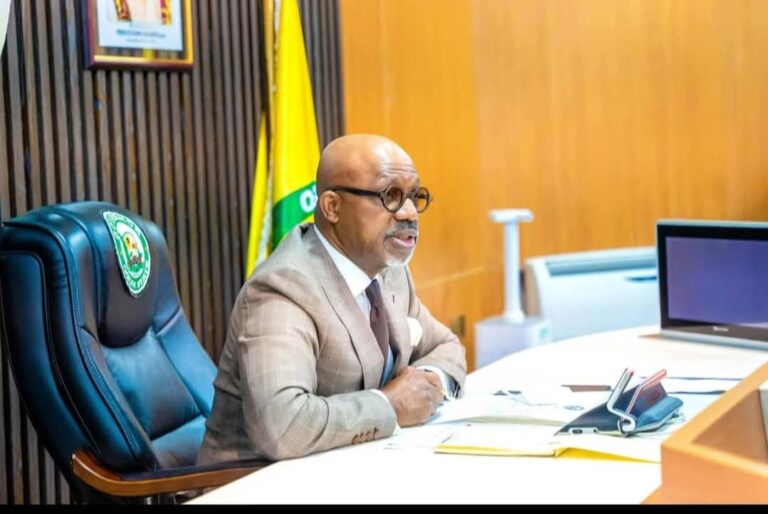
Abiodun: The Visionary CEO Governor Shaping the Future of Ogun State

Abiodun: The Power of Vision — The CEO Governor Redefining Ogun’s Future

In the theatre of governance, where the dance of politics often blurs the line between vision and spectacle, few leaders have the ability to sculpt their states as architects of industry and commerce. Prince Dapo Abiodun, CON, emerges not merely as a governor but as a strategist, a CEO of a living, breathing enterprise called Ogun State. “A leader is one who knows the way, goes the way, and shows the way,” John C. Maxwell once wrote, and nowhere is this more vividly illustrated than in the transformation of Ogun, a state now pulsating with industrial ambition, innovation, and economic dynamism — despite the constant cacophony of critics and social media bullies who insist on confusing visibility with failure.

Abiodun’s governance is not a fleeting exercise of authority but a deliberate symphony of strategy, policy, and marketing acumen. Ogun State under his leadership is a mosaic of ambition, where roads and air transport already drive commerce and strategically planned rail corridors are poised to complement these systems, forming the blueprint of a multi-modal industrial future. “The future depends on what you do today,” Mahatma Gandhi observed, and Abiodun’s today is a blueprint for a Ogun that is not only a hub of Nigerian industry but a beacon for the world. While detractors and online bullies flood timelines with criticism, the state’s visible transformation tells a different story — a story of execution, not mere opinion.

The metaphorical heartbeat of this transformation is the integrated transport strategy, which merges current roads and air transport with planned rail networks designed to complement existing infrastructure, ensuring that Ogun is future-ready for global commerce. Each highway laid, each port developed, and every strategic initiative is a masterstroke on the canvas of Ogun’s industrial revolution. “Vision without execution is hallucination,” Thomas Edison said, and in Ogun, the plans are grounded in both vision and action. Those who deride plans as “talks and promises” may fill social media with noise, but reality — the rise of infrastructure and industry — is moving forward regardless of the clamor.

The Governor’s industrial revolution is measured not only by physical structures but by its capacity to catalyze human potential. Factories rise like monuments to opportunity, each symbolizing employment, innovation, and dignity through work. Nelson Mandela once said, “It always seems impossible until it is done.” For the doubters, for those who thrive on cynicism, the rise of Ogun’s industrial parks, logistics hubs, and strategic transport plans is a living rebuke: impossible is being made possible before their very eyes.

Abiodun’s approach mirrors that of a corporate CEO meticulously branding a global enterprise. He understands that a state is more than its geography; it is a brand, a promise, and an invitation to invest. “Economic development is not a gift; it is a reward of vision, discipline, and effort,” a Yoruba proverb teaches, and Ogun under Abiodun exemplifies this. Investors now see the state not as a peripheral entity but as a strategic partner, where industrial ambition is nurtured, and returns are tangible. Social media bullies may question motives, invent false narratives, or trivialize progress, but investors respond to results, not rhetoric.

Ogun’s industrial corridors, from Agbara to Sagamu, are not simply zones of production but symbolic landscapes of ambition. Here, the clang of machinery and the hum of technology narrate a story of progress, reminding all that, “A tree does not make a forest.” Sustainable growth requires collaboration, investment, and coordinated strategy, and every brick laid and every corridor planned is a seed planted for a harvest of employment, innovation, and economic empowerment. The planned rail network, integrated with road and air transport, ensures that Ogun’s industrial corridors will operate with a holistic logistics ecosystem, prepared to meet global standards when realized.

The human dimension of this transformation is central. Industrialization is pursued not for prestige, but for empowerment. Training centers, technical schools, and entrepreneurship programs ensure citizens are participants, not spectators. The Yoruba adage, “Ọmọ tó n wẹyìn ọ̀kọ, kì í mọ iye rẹ̀” — “A child who follows the path of diligence will understand its value” — underscores the governor’s commitment to developing a workforce ready for modern industry. Those who hide behind hashtags and trolling campaigns cannot obscure the tangible opportunities being created for citizens across the state.

Abiodun’s bi-modal transport strategy is emblematic of Ogun’s future connectivity. While roads and air transport currently move goods and people efficiently, the planned rail corridors will complement these systems, forming a multi-modal logistics backbone. “An investment in knowledge pays the best interest,” Benjamin Franklin noted, and the government’s strategic planning for transport demonstrates that foresight and execution are inseparable. Critics can flood social media with their doubts, but infrastructure built and plans executed are measured in outcomes, not tweets.

Abiodun’s approach fuses modernity with tradition. The Yoruba proverb, “Igi imu ni k’a fi tan’nu igi eepo” — “it takes the strength of a tree to support another” — mirrors his collaborative strategy, fostering partnerships with private investors, communities, and international stakeholders. Every decision is guided by cultural resonance and practical strategy, creating an environment where industrialization is both innovative and inclusive, unperturbed by online cynicism or ephemeral criticism.

Every infrastructural milestone tells a story of resilience. Roads stretch like open hands welcoming trade; ports hum with promise; industrial estates rise as monuments of ambition. Booker T. Washington’s words resonate: “Success is to be measured not so much by the position that one has reached in life as by the obstacles which he has overcome.” In Ogun, these obstacles include misinformation, cynicism, and the relentless trolling of social media commentators who mistake visibility for failure. Yet, the state advances, demonstrating that leadership, results, and vision outweigh noise.

The Governor’s marketing genius ensures that perception aligns with reality. Ogun is no longer a border state but a symbol of possibility. “A river cuts through rock not because of its power but its persistence,” a proverb reminds us. Abiodun’s incremental, deliberate strategies carve pathways for sustainable growth, showing that long-term vision triumphs over transient cynicism. Factories, skills development programs, and investor-friendly policies converge to create a state where industrial ambition is tangible, credible, and sustainable — not shaped by trending opinions or trolls, but by measurable progress.

Abiodun’s industrial vision aligns with global trends while remaining locally grounded. Sustainability, technology adoption, and community engagement are pillars of the plan. William James said, “Sow a thought, reap an action; sow an action, reap a habit; sow a habit, reap a character; sow a character, reap a destiny.” In Ogun, each policy, investment, and strategically planned rail corridor sows the seeds of a resilient industrial destiny. Trolls and doubters may mock these plans, but destiny is not shaped by ridicule — it is built by action.

Leadership under Abiodun exemplifies resilience and calculated courage. Nelson Mandela observed, “Courage is not the absence of fear, but the triumph over it.” Guiding Ogun through economic complexity requires vision, patience, and determination. Every strategic plan, every investment, and every infrastructure project is a testament to leadership that does not bow to trending narratives or online attacks but remains committed to the people and the state’s long-term prosperity.

Education, skill development, and entrepreneurship accompany every industrial milestone. By nurturing talent alongside infrastructure, Ogun ensures that human capital grows in tandem with economic capacity. African wisdom reminds us that collective effort is essential: “A nation does not grow by the work of one hand alone.” This philosophy underpins Abiodun’s governance — building systems, empowering citizens, and engaging investors in a shared vision of progress.

Ultimately, Ogun under Abiodun is a river of opportunity flowing through the landscape of Nigeria. Industrial parks, ports, and strategic corridors form the fabric of possibility. Confucius observed, “The man who moves a mountain begins by carrying away small stones,” and Abiodun’s incremental, purposeful leadership moves Ogun toward its destiny as a premier industrial hub, undeterred by social media noise or public cynicism.

In conclusion, Prince Dapo Abiodun, CON, stands not only as a governor but as a CEO of transformation. His industrial revolution blends infrastructure, human capital, cultural resonance, and strategic marketing into a cohesive vision. Ogun is no longer a frontier awaiting discovery; it is a hub where vision meets execution, ambition meets opportunity, and leadership manifests in measurable progress. “He who has a why to live can bear almost any how,” Friedrich Nietzsche said, and Abiodun’s why — the prosperity and global relevance of Ogun — illuminates every decision, every plan, and every milestone, showing that criticism and online bullying can never halt the march of purposeful governance.

Tayo Mabeweje
Senior Special Assistant (Media)
Office of the Governor,
Ogun State
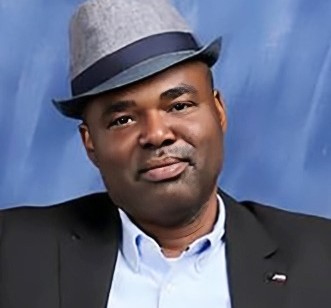
Imbil Telecom CEO, Akeem Adewale Ogunkoya, Receives 2025 NUJ Osun State Excellence Award

0

Imbil Telecom CEO, Mr. Akeem Adewale Ogunkoya, Honoured with 2025 NUJ Osun State Award of Excellence

Recognition underscores Imbil Telecom’s impact on innovation, connectivity, and community development in Nigeria.

The Chief Executive Officer of Imbil Telecom Solutions Nigeria Limited, Mr. Akeem Adewale Ogunkoya, has been honoured with the 2025 Award of Excellence by the Nigeria Union of Journalists (NUJ), Osun State Council, in recognition of his remarkable leadership and contributions to the growth of Nigeria’s telecommunications industry.

The award presentation took place on Thursday, October 30, 2025, during the NUJ 2025 Press Week and Awards Ceremony held at the NUJ Press Centre, Iwo-Ibadan Road, Osogbo. This year’s event, themed “Governance and Security in Nigeria: Progress, Challenges and Future Directions,” brought together prominent figures from the media, government, and private sectors to celebrate excellence and professionalism.

Governor Ademola Adeleke, represented by the Commissioner for Information and Public Enlightenment, Hon. Kolapo Alimi, commended the honorees for their commitment to public service and societal development. He urged journalists across the state to continue upholding professional ethics and to remain neutral in their reportage.

In his acceptance remarks, Mr. Akeem Ogunkoya expressed gratitude to the NUJ for the honour, dedicating the award to his team at Imbil Telecom Solutions. He said the award was a recognition of collective effort and dedication, adding that at Imbil Telecom Solutions, the goal remains to enhance connectivity, support economic growth, and empower communities through technology.

Under his leadership, Imbil Telecom Solutions has continued to expand its footprint across Nigeria, providing reliable network infrastructure, ICT consultancy, and broadband services that bridge the communication gap between urban and rural communities. The company is also known for its corporate social responsibility initiatives focused on youth empowerment and community development.

Other award recipients at the event included Western Spring Television, which was named Best TV Station of the Year; Rave 91.7 FM, awarded Best Radio Station of the Year; Tobi Sanusi, recognised as Best TV Reporter; and Femi Ojo, honoured as Best TV Newscaster.

The inclusion of a business leader like Mr. Akeem Ogunkoya among the awardees underscores the NUJ’s recognition of individuals whose work strengthens public communication, supports governance, and promotes national development.

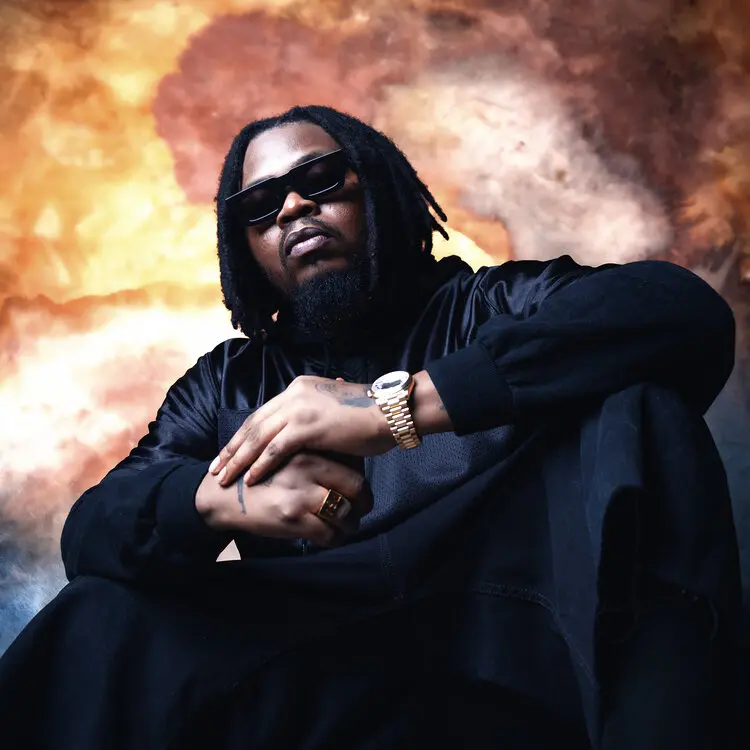
I’m Not Desperate For International Recognition — Olamide

Nigerian indigenous rapper Olamide Adedeji, popularly known as Olamide, has revealed that identifying his audience was a major factor in shaping his music career, emphasizing that he is not desperate for international validation.

The “Local Rapper” crooner stated this in a recent interview with BBC Radio 1Xtra, where he explained that he remains committed to his indigenous sound and has no plans to alter his style to suit Western tastes.

“You have to identify your audience. Once you identify your audience, the rest of the world will catch up eventually. So, I have to stay true to myself and no matter where it is, what it is, I mean, in this world, I have to stay true to myself,” he said.

“I’m comfortable in my skin. I’m a Naija guy, Yoruba boy, I have H-Factor and all that, and I’m proud about it. You just have to stay true to yourself,” Olamide added.

Obi Mikel Hails Osimhen As Super Eagles’ Big Boy

0

Former Super Eagles captain John Obi Mikel has praised striker Victor Osimhen, describing him as the “big boy” of the national team.

Mikel made the remark while reacting to Osimhen’s outstanding performance in Nigeria’s 4-0 victory over Benin Republic during the 2026 FIFA World Cup qualifier.

Osimhen scored a hat-trick in the match played at the Godswill Akpabio Stadium in Uyo, securing Nigeria’s place in the World Cup playoffs scheduled for November.

Our World Cup dream is still alive. I spoke about it before the two games. I said whatever is going on with the FA, all the negativity, all the corruption and everything that is going on, those two games [Lesotho and Benin Republic] were must-win games, and we did that,” Mikel said on The Obi One podcast.

“Credit to the boys, they absolutely did that and of course, the main man [Victor Osimhen] we have talked about so many times on this podcast.

“If we didn’t win that game, we wouldn’t be talking about trying to qualify for the World Cup.

“Victor Osimhen has single-handedly kept us alive. In one of the biggest games, he came out and scored a hat-trick.

“When the pressure is on, the big boys step up, and that is exactly what he has done. He is the big boy in that team right now, and we all need him,” Mikel added.

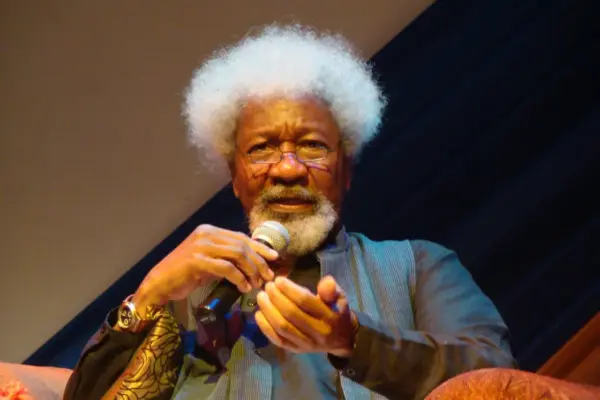
US Revokes Wole Soyinka’s Visa, Nobel Laureate Expresses Surprise

0

Nobel Laureate, Professor Wole Soyinka, has announced that his visa to the United States of America has been revoked.

Soyinka disclosed this on Tuesday during a meeting with journalists at Kongi’s Harvest Gallery, Freedom Park, Lagos Island.

He revealed that the US Consulate informed him of the revocation in a letter dated October 23, 2025.

It is necessary for me to hold this conference so that people in the United States who are expecting me for this event or that event do not waste their time. I have no visa; I am banned, obviously, from the United States. And if you want to see me, you know where to find me,” Soyinka said.

The Nobel Laureate expressed surprise and confusion over the decision, saying he was unaware of any wrongdoing that could have led to the revocation.

He suggested that the move might be connected to his criticism of former US President Donald Trump and his policies.

Professor Soyinka had previously torn up his US green card in protest after Trump’s 2016 election victory. He also declined an invitation from the US Consulate for a visa re-interview in September 2025, citing the date’s historical significance as the anniversary of the 9/11 attacks.

Kanu Refuses to Present Defence, Claims No Case Against Him

0

The detained leader of the Indigenous People of Biafra (IPOB), Nnamdi Kanu, has refused to open his defence in his ongoing trial for alleged terrorism offences, insisting that there is no valid charge against him.

At the resumed hearing on Monday before Justice James Omotosho of the Federal High Court in Abuja, Kanu told the court that he had reviewed the case files and found no evidence linking him to the allegations.

According to him, “There is no case against me. If there is no case against me, it will be futile for me to enter any defence.”

Kanu had earlier indicated his intention to call witnesses and applied for witness summons, but at Monday’s proceedings, he announced that he would represent himself.

Prosecuting counsel, Adegboyega Awomolo (SAN), informed the court that the day’s business was for the defendant to open his defence. However, Kanu maintained his stance that the prosecution had failed to establish any case.

Justice Omotosho took time to explain to Kanu the options available in a criminal trial — to make a no-case submission, enter a defence, or rest on the prosecution’s case. The judge reminded him that his earlier no-case submission had already been dismissed, and the court had ruled that he had a case to answer.

Kanu, however, requested a week’s adjournment to file a written address arguing that there was no valid charge pending against him.

In response, Awomolo urged the court to consider the matter closed and to adjourn for judgment, saying, “I take it that the defendant said he is not putting in any defence, because there is no valid charge against him.”

Justice Omotosho noted that Kanu’s position amounted to a defence on a point of law and advised him to consult legal experts before proceeding further.

“There is need for you to consult people who are knowledgeable in criminal prosecution to advise you on how to proceed. Please, my brother, make adequate consultation. This is criminal prosecution, not economics,” the judge advised.

The judge granted Kanu four days to file his written address and serve it on the prosecution, who would also have time to respond.

The matter was adjourned until November 4, 5, and 6 for either the adoption of written addresses or for Kanu to open his defence, should he decide to change his mind.

FG, UNICEF Call for Media Partnership to Safeguard Children’s Rights

0

The Federal Government, in collaboration with the United Nations Children’s Fund (UNICEF), has called on media organisations and practitioners across the country to join efforts in protecting the rights of children.

Speaking through the Federal Ministry of Information and National Orientation, the government emphasised the vital role journalists play in shaping public understanding, influencing attitudes, and safeguarding vulnerable groups, especially children.

This call was made on Monday during a two-day training workshop for media practitioners on ethical journalism and children’s rights reporting held in Ibadan, Oyo State.

The Permanent Secretary of the ministry, Ogbodo Nnam, represented by the Assistant Director and Head of the Child Rights Information Bureau, Temitoye Falayi, said the training was aimed at enhancing ethical reporting on child protection.

He noted that the exercise was designed to help journalists reflect on their ethical obligations, explore best practices for reporting on children’s issues, and strengthen understanding of child rights as provided in national laws and international conventions.

“The media holds immense power — the power to inform, inspire, and hold institutions accountable. But with that power comes a profound responsibility: to report with integrity, sensitivity, and respect for human dignity,” Nnam said.

When it comes to stories involving children, that responsibility becomes even greater. Every image, every word, and every frame we publish can have lasting consequences on a child’s life, safety, and future,” he added.

He further noted that through open discussions, case studies, and shared experiences, the training aimed to build a media culture that protects children’s identities, amplifies their voices responsibly, and upholds the highest ethical standards.

In her keynote address, the UNICEF Chief of Lagos Field Office, Celine Lafoucriere, stressed that ethical reporting about children was essential to ensuring that their rights were not compromised in the pursuit of sensational headlines.

“At UNICEF, we believe that every child has the right to be seen, heard, and protected. Ethical reporting is not just a professional standard; it is a moral imperative,” Lafoucriere said.

“It is about ensuring that children are portrayed with dignity, that their stories are told with care, and that their rights are never compromised in the pursuit of headlines or profit,” she added.

She urged journalists to leave the training with renewed commitment to uphold the highest standards of journalism, especially when reporting on children, and to serve as champions of ethical reporting in their newsrooms and communities.

“The way we report on children today shapes the kind of society we build tomorrow. By choosing ethics, you choose protection, dignity, and a better future for every child in Nigeria,” she stated.

2026: APC Will Win All 177 Wards In Ekiti, Says Gov Oyebanji

0

Ekiti State Governor, Biodun Oyebanji, has expressed confidence that the All Progressives Congress (APC) will record victory in all 177 wards of the state in the June 20, 2026, governorship election.

Speaking on Saturday at his ward in Ikogosi Ekiti during the party’s delegates congress, Oyebanji said his administration had endeared the party to the people, including members of the opposition, due to its performance in governance.

The congress was held to elect delegates from the 177 wards who will, during the party’s primary election on October 27, affirm Oyebanji as the APC governorship candidate for the forthcoming election.

The APC National Working Committee had earlier announced Oyebanji as the consensus candidate following the withdrawal of another aspirant, Mrs. Atinuke Olayemi Omolayo, while two others — Kayode Ojo and Abimbola Olawumi — were disqualified.

Describing the peaceful conduct of the exercise, Oyebanji said it demonstrated the discipline and unity of the party in the state.

“You can see that our members are happy and united in one accord. In all the wards, delegates were elected by consensus, which shows unity between the leadership and members of the party,” he said.

The governor added that the APC had become more attractive under his leadership, noting that several members from other parties had joined due to the administration’s performance.

“With God on our side, the record we want to break on June 20 next year is to win all 177 wards. It has never happened before, but by God’s grace, APC will win convincingly across the state,” Oyebanji declared.

The Chairman of the APC Delegates Congress Committee for Ekiti State, Jaret Tenebe, commended the peaceful conduct of the exercise, saying the process was transparent and in line with the party’s guidelines.

Tenebe, who also serves as the APC chairman in Edo State, congratulated the elected delegates and praised Oyebanji for strengthening the party’s unity.

Meanwhile, a coalition of civil society organisations and Independent National Electoral Commission-registered observers lauded the peaceful nature of the exercise.

In a communiqué issued in Ado Ekiti, the groups — Citizens Right for Peace and Non-Violence Initiative, Global Development Centre for Rescue Mission Nigeria, and Suitable African Initiative for Suitable and Positive Development — described the election as “peaceful and credible.”

Their coordinator, Romanus Azubuike, said the congress was conducted across all 177 wards in line with party rules and monitored by security agencies.

“We appreciate all stakeholders and party members for their peaceful conduct. The governor demonstrated true leadership by not interfering in the process despite being a candidate,” he said.

Azubuike noted that the exercise was significant in ensuring transparency, fairness, and inclusiveness ahead of the party’s governorship primary.