
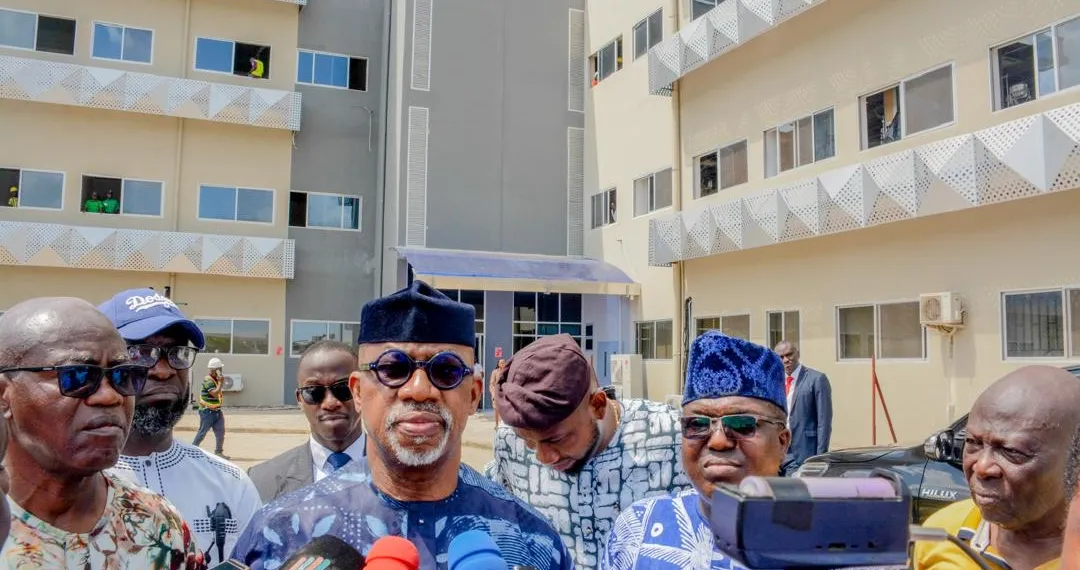
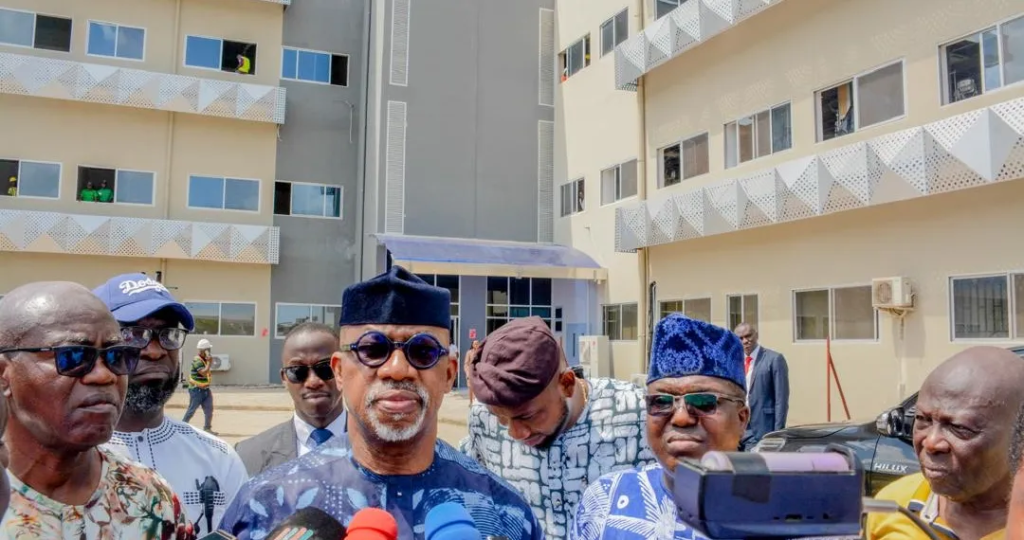
L-R: Tokunbo Talabi, Secretary to the Ogun State Government; Dapo Abiodun, Governor of Ogun; Toyin Taiwo, Chief of Staff to the Governor; and Ade Akinsanya, Commissioner for Works, at the renovated 250-bed hospital, Oke Mosan, Abeokuta.
There is a telling detail about the state of healthcare in Ogun when Governor Dapo Abiodun took office in May, 2019. The entire state, with more than five million people, had only five ambulances that were functioning. Five. In a state of more than 16,000 square kilometres, where even the rural communities can be accessed only by small roads or waterways, five ambulances were not just a logistical shortcoming; it was a statement about what had been a priority of the previous administration.
For inhabitants of such communities, a medical emergency was a gamble. A pregnant woman in Ogun Waterside, going into labour at night, was faced with the dual hazard of the birthing condition and the near-impossibility of getting to a facility in time.
Health centres in many wards had no running water, no reliable electricity and equipment so out of date it offered little more than a figment of care. Workers at several facilities improvised to make sure important services did not collapse, not due to innovation, but due to necessity.
That was the inheritance. What has been built since is another story entirely.
A System Rebuilt from the Bottom Up
The most basic decision the Abiodun administration had to take was to begin where the people are, at the primary healthcare level. Rather than focus on only flagship hospital projects, which make for impressive ribbon-cutting ceremonies, the government set out in June 2020 to build or upgrade primary health centres across all 236 wards in the state, ensuring each community had access to functional healthcare.
The logic makes sense, and the precedent is global. Primary healthcare is where the majority of a population’s healthcare needs should be met. It is where children receive their vaccines, where mothers go for their ante-natal, where hypertension and diabetes are caught before they become a crisis. A poor PHC system puts pressure on secondary and tertiary facilities, which are quickly overwhelmed. That cycle serves no one.
The government has renovated over 60 Primary Healthcare Centres by 2022. Through strategic partnerships, most notably the World Bank-supported IMPACT Project and the federal Basic Health Care Provision Fund (BHCPF), the state has since revitalised over 75 PHCs in all 20 local government areas as the first phase of a broader reform programme. These are not cosmetic touch-up jobs.
As described by Dr. Elijah Ogunsola, Executive Secretary of the Ogun State Primary Health Care Development Board, each renovation involved a full overhaul: structural improvements, water supply systems, power solutions, delivery beds, and an ultrasound machine in each of the 20 LGAs.
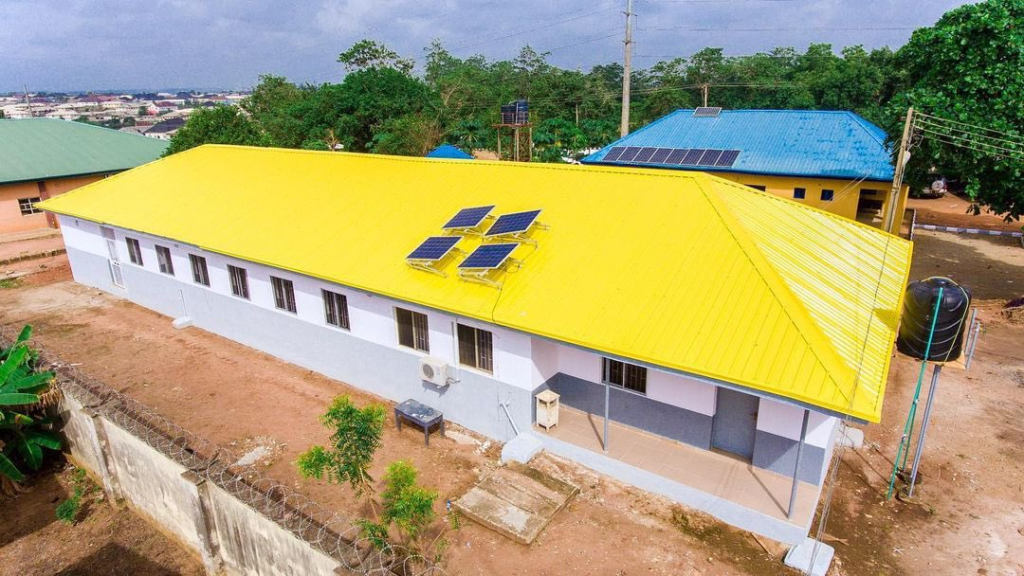
This is life-changing to a community such as the Itun-Oluwo in the Abeokuta North, where seasonal hand-dug wells were the only source of water before the renovation. It is a dignity to the health worker who once had to make do with basic care with no electricity and equipment. And to the mother who can now have the benefit of safe delivery in her ward, and not taking an expensive ride to Abeokuta. It is a second chance, quite plain and simple.
The state again announced in 2023 that clinical and structural interventions would be implemented in all 236 centres in the 2024 to 2026 Medium Term Expenditure Framework, which is indicative of it not being a one-off project but a long-term programme of reform.
When Emergencies Must Not Wait.
It is in a crisis that a healthcare system can be judged. The reform of emergency response by Ogun is an indication of an administration that knows this.
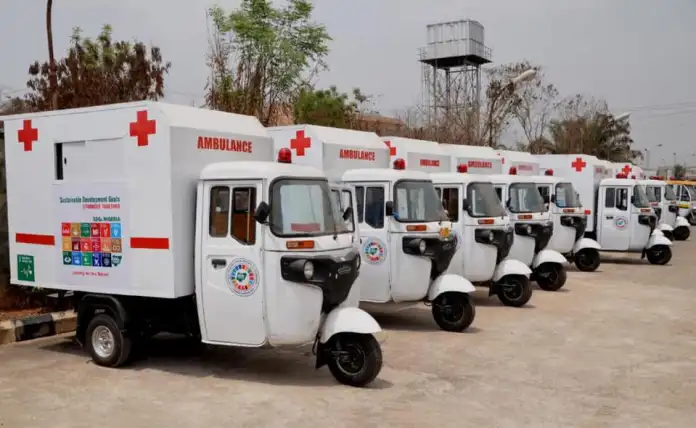
The state has been increasing its fleet of ambulances since 2019, with an increase of Basic life support ambulances to a total of 50 to cover all three senatorial districts to ensure 24-hour coverage. Since the use of standard vehicles is not possible in rural areas with narrow roads, 90 tricycle ambulances were introduced into the communities that can hardly be reached: 50 ambulances were purchased by the state government, 30 by the Office of the Senior Special Assistant to the President on SDGs, and 10 by individuals who donated them. In the case of the riverine communities of Ogun Waterside, the boat ambulance currently provides service because patients would have lacked any opportunity of accessing emergency services altogether.
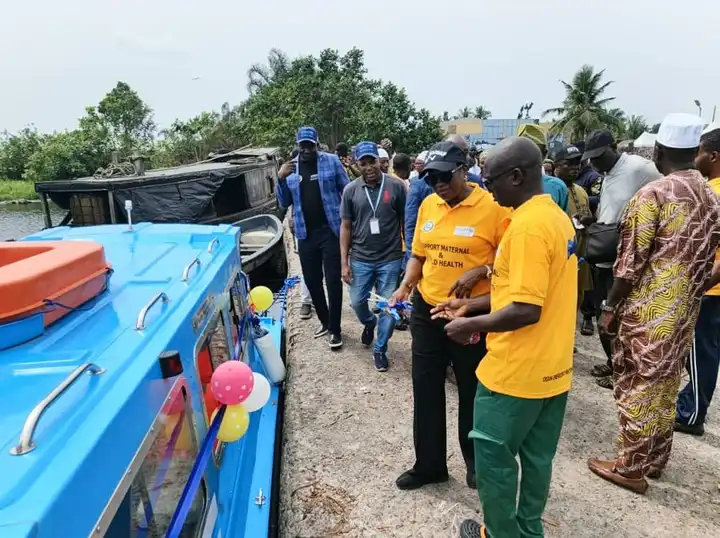
Boat ambulance commission at Makun-Omi, Ogun Waterside Local Government. Photo Source: Business Day. Source: UGC
The change in odds is due to this expansion. It means that the woman in labour in a border community has a plausible chance of getting to help. It means a child with severe malaria is not entirely reliant on a family’s ability to find and pay for transportation in the wee hours of the night. Emergency care, in this conception of the administration, is not a privilege of being close to urban centres. It is a state-wide entitlement.
Infrastructure is Incomplete Without Affordability
A renovated facility does not include the woman who cannot pay for consultation, or the old man who skips medication to feed his family.
Ogun’s response to this has been the systematic expansion of the Ogun State Health Insurance Scheme (OGSHIS).
The trajectory is deliberate, because in 2020, the state launched the informal sector scheme that extends coverage to artisans, market women, traders and other residents who were not under formal employment. In February 2022, the scheme was formally put into operation. And in August 2024, the Formal Sector Health Insurance Scheme was introduced (where the government agrees to pay 50 percent of the premium for every civil servant who is enrolled, a direct intervention that takes some of the financial burden off workers who often make just enough to get by).
Underpinning all of this, the administration paid a counterpart fund of N100 million as far back as February 2020 to access the federal government’s Basic Health Care Provision Fund, as a strategic move that unlocked federal resources and enabled the state to employ and deploy approximately 60 doctors and 80 midwives across the 20 LGAs in the state. The state also released N310 million in the form of an equity fund to provide health insurance access to low-income people (part of which helped provide free surgeries to over a thousand vulnerable beneficiaries).
That money trail tells its own story: this is not a government that announced a scheme and moved on. It is one that funded it, expanded it, and subsidised it for those who needed it most.
Human Capital as the Spine in the System
A health facility that lacks trained and motivated staff is just an expensive building. The Abiodun administration has made a serious investment in Ogun’s health workforce, recognising that infrastructure and personnel have to go hand-in-hand.
Beyond the deployment of doctors and midwives through the BHCPF, the state has focused on continuous professional development, with training programmes in the areas of maternal and child health, immunisation and disease surveillance. In parallel with the IMPACT Project, the state has started the recruitment of more than 400 Community Health Workers in all 20 local government areas, specifically to extend the reach of the health system into communities where formal health workers are still thin on the ground.
This investment in human capital is not a rhetorical one. It is the difference between a functioning health centre and one that is fully equipped but poorly run – a distinction that patients know acutely.
Validation that is Data-Driven, as Opposed to Decorative.
In December 2025, Ogun State came first runner-up in the South West zone at the third edition of the Primary Health Care Leadership Challenge Award organised by the Nigeria Governors’ Forum for the second successive year. The award of $400,000, provided to help spur excellence and transformation in the delivery of healthcare, is not given on the basis of political affiliation or rhetoric. It is benchmarked on governance performance indicators, accountability measures and demonstrated health outcomes. Winning it two consecutive times means something.
So does the assessment of the World Bank. During a visit to the state in January 2026, World Bank officials praised Ogun’s investments in primary healthcare, specifically the contribution of strengthened PHCs in improving population health outcomes. For an institution where its evaluations are based on data, this is not a courtesy compliment.

Commissioner for Health, Dr Tomi Coker, has described the administration’s approach to healthcare as one focused on increasing access, especially at the grassroots, and the evidence bears her out. Ogun State’s growing reputation as the model for sub-national healthcare leadership in Nigeria is a consequence of work done and not perception managed.
The Road Ahead
None of this indicates that the work is complete. Ogun State is still struggling to reach the goal of universal health coverage, and the gap between ambition and delivery still exists in some communities. Infrastructure in border and hard to reach areas is still behind. Work force is unevenly distributed. The health insurance scheme is still struggling to build its enrolment base.
But the direction is firm, the structures are in place, and the systems are functioning at a level they were not in 2019. A state where there used to be 5 ambulances now has over 50 life support vehicles and 90 Tricycle units reaching the communities where roads are barely passable. A situation where health centres were without water and electricity now has a phased renovation programme in all 236 wards. A state where the uninsured simply went without has now piled on insurance schemes serving formal workers, informal traders and vulnerable indigents.
That is not a press release. It is a reformed architecture. And when a woman in Ogun Waterside gives birth to her child safely on a boat ambulance instead of on a mud floor, when an artisan in Sagamu renews her health insurance for the price of lunch for a few months, the promise of the system is made real. This is the measure of a stronger health system. Not the buildings themselves but the lives they are meant to protect.