Children aged 16 and 17-year-olds in the UK will face a voluntary overnight social media curfew, alongside a shutdown of infinite scrolling and mandatory breaks in AI chatbot use, under new plans announced by Technology Secretary Liz Kendall.
According to a report by The Independent UK on Tuesday, the measures form part of the government’s wider restrictions on children’s social media use, and will see default settings block access for older teenagers between midnight and 6 am.
Kendall, in a statement, said, “These measures will be crucial in helping young people get the sleep they need, focus on school and college, and spend more quality time with family and friends, all of which are fundamental to building a happy, healthy and fulfilling adult life.
“We want young people to enjoy the benefits of technology while having the tools to make the online world a place where they can thrive.”
The Independent said features designed to keep users engaged, such as never-ending video reels and algorithmic feeds, will also be automatically switched off under the new defaults.
However, the report noted that critics have questioned how effective the measures will be, given that 16 and 17-year-olds will be able to turn off these default settings themselves.
The curfew plan follows last month’s announcement of a broader social media ban for under-16s by Prime Minister Sir Keir Starmer’s government, expected to cover platforms including Snapchat, TikTok, YouTube, Instagram, Facebook and X, but not messaging services such as WhatsApp and Signal, from next spring, according to the newspaper.
The report added that responsibility for working out key details of the policy will fall to Andy Burnham, who is set to become prime minister after winning the Makerfield by-election.
Kendall is also reportedly pushing new safeguards for children using artificial intelligence, including requiring under-18s to take regular breaks while using chatbots, and a crackdown on AI services that give dangerous, misleading or unverified mental health advice.
Ministers are said to be considering banning chatbots deemed a serious threat to children.
Conservative shadow education secretary Laura Trott reportedly criticised the plan, describing it as “another dog’s dinner from Labour” and arguing that curfews teenagers can simply switch off “won’t achieve anything.”
Over the past few days, I’ve watched the conversations
around the so called Olodo Uprising with amused interest.
Beyond the memes and arguments, I think it reveals
something much deeper.
It reflects the value system we have gradually
embraced as a society.
A system where instant gratification often receives more attention than deep thinking. Where going viral can seem more rewarding than
solving problems. Where entertainment frequently outperforms education in visibility.
But here’s the interesting part.
This shouldn’t discourage those who love learning.
If anything, I believe, it should encourage them.
Because the fewer people willing to think critically, solve
difficult problems, and pursue intellectual excellence,
the more valuable people with those skills become.
Artificial Intelligence can generate information.
But it still takes an intelligent mind to ask the right
questions, evaluate evidence, make sound decisions,
and create solutions that improve lives.
Every breakthrough we enjoy today; whether in medicine, engineering, technology, agriculture, or finance – exists because someone chose to think deeply when
everyone else could have settled for the obvious.
As someone working at the intersection of education,
genomics, and precision medicine, I see this every day.
Scientific discoveries don’t happen because people
memorized facts. They happen because people stayed curious long
enough to ask better questions and create sustainable
solutions to problems.
The same applies beyond science.
Nations don’t move forward because they produce
more content. They move forward because they produce more
thinkers, innovators, builders, researchers, entrepreneurs, and
leaders who can solve real problems.
This isn’t an argument against creators or entertainers.
Far from it. We need creativity, storytelling, and culture.
In fact, I’ve built much of my own work by
communicating science and education through digital
platforms.
But I hope we don’t get to a point where intelligence
becomes something to mock instead of something to
admire.
The good news is that value systems can change.
Culture is shaped by what gets rewarded.
When we intentionally celebrate excellence, reward innovation, invest in research, support great teachers, and create opportunities for people who pursue knowledge, we send a powerful message to the next generation:
Thinking deeply is worthwhile. Curiosity is valuable. Excellence is worth pursuing.
Nigeria has never lacked brilliant minds.
Our challenge has often been creating an environment where those minds are encouraged, rewarded, and given opportunities to flourish.
I still believe we can build that kind of society.
And until then, I’ll keep doing my part, through education, science, and mentoring, to help raise people who don’t just consume information, but use it to solve problems and create lasting impact.
Because in the end, the future will always belong to those who know how to think.
Written by Blessing Afolabi
Co-founder,
GradePlus Africa Author: Academic Excellence Blueprint and Scholarship Application Companion Workbook
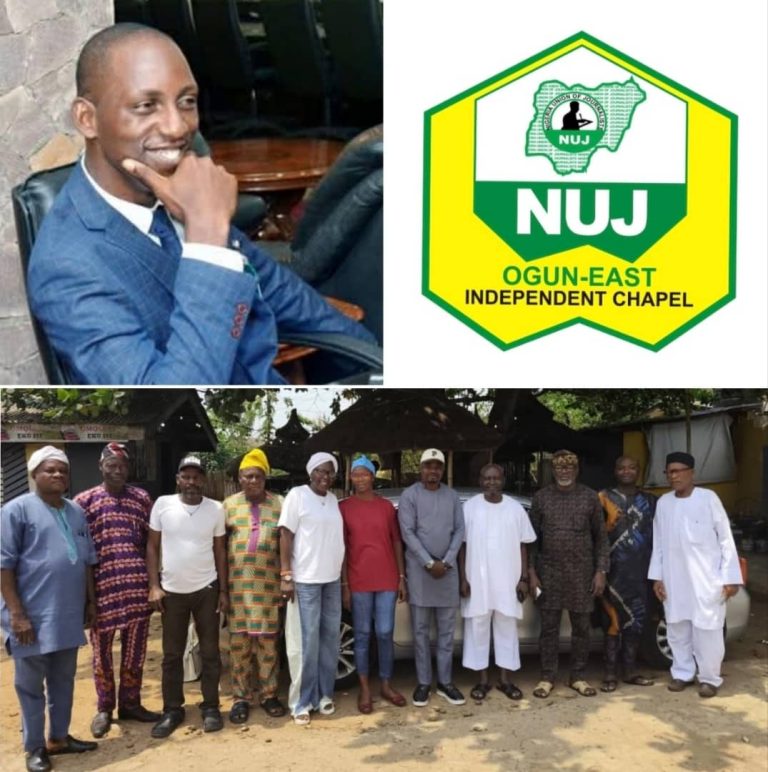
The Nigeria Union of Journalists (NUJ), Ogun East Independent Chapel, has congratulated the Chief Executive Officer of Eagle FM 102.5, Ilese, Otunba Kunle Kalejaiye (SAN), on the occasion of his birthday.
In a goodwill message jointly signed by the Chapel Chairman, Comrade Oluseun Oduneye, and Secretary, Comrade Funmi Suleodu, the union praised Otunba Kalejaiye for his exemplary leadership, unwavering support for journalism, and remarkable contributions to the media industry and national development.
The chapel wished the celebrant continued good health, wisdom, and greater accomplishments in his service to humanity and the nation.
The chapel described the senior advocate as a committed leader whose dedication to service, integrity, and human capital development has positively impacted many people within and beyond Ogun State.
According to the statement, Kalejaiye’s professional excellence and unwavering support for the growth of the media industry have earned him admiration and respect from colleagues and stakeholders.
The union prayed for God’s continued guidance, good health, divine wisdom, and greater accomplishments for the Eagle FM boss as he celebrates another year.
The statement concluded by wishing him a happy birthday and many more years of fruitful service to humanity.
The 28th Annual Law Week of the Nigerian Bar Association (NBA), Ijebu-Ode Branch, concluded on a colourful note with the inauguration of a new executive committee, the presentation of awards to outstanding personalities, and the unveiling of a strategic agenda focused on improving members’ welfare, upholding professional excellence, and advancing the rule of law.
The event, held at the newly commissioned Bamofin Adedeji Bar Centre, marked the end of the two-year administration of the outgoing Chairman, Prof. Fassy Adetokunboh O. Yusuf, and the formal assumption of office by Mr. Gbenga Tajudeen Adeiye as the new Chairman of the branch.
Also sworn in were Mrs. Elsie O. Olaniyi, ACArb, Notary Public, as Vice Chairman, Mr. Ope Osibanjo as Secretary, Mr. Dele Okenla as Treasurer, alongside other elected officers who will steer the affairs of the branch for the 2026–2028 administration.
In his inaugural address, Adeiye described his election as both a privilege and a responsibility, expressing appreciation to members for the confidence reposed in him and his team.
Addressing an audience that included senior advocates, judicial officers, magistrates, members of the Bar, past leaders of the association and invited guests, the new chairman pledged to provide purposeful leadership and build on the achievements of previous administrations.
He assured members that his administration would operate an open-door policy, encouraging constructive engagement, suggestions and active participation in the affairs of the branch.
Adeiye identified members’ welfare as the central pillar of his administration, announcing plans to establish a dedicated welfare fund that would provide structured support for members during periods of need rather than relying on emergency fundraising efforts.
He disclosed that efforts were already underway to secure a brand-new bus for the branch through donor support, expressing optimism that the project could materialise sooner than anticipated.
The chairman also reiterated his commitment to establishing an NBA Cooperative Society that would enable members access loans of up to twice their savings, thereby improving financial support and economic stability within the branch.
On professional development, Adeiye pledged to strengthen continuing legal education programmes and further improve the branch’s annual Bar Lecture, which he described as a flagship intellectual platform for legal discourse and professional growth.
He also promised to increase the participation of members at NBA Annual General Conferences through sponsorship opportunities and financial support where necessary.
Among other initiatives outlined by the new leadership are plans to facilitate affordable land acquisition opportunities through a proposed lawyers’ estate, strengthen branch committees and expand opportunities for member engagement.
The chairman also advocated reforms in the branch’s electoral process, proposing that even unopposed candidates should be subjected to a yes-or-no vote by members to reinforce accountability and democratic participation.
Reflecting on the recently concluded election, Adeiye expressed concern over the use of personal attacks and character assassination during campaigns, urging members to embrace issue-based politics and preserve the unity of the association.
According to him, future elections should be conducted in a manner that promotes healthy competition without creating divisions within the legal community.
On the broader role of the association, Adeiye reaffirmed the branch’s commitment to defending citizens’ rights and safeguarding the rule of law.
He stated that the NBA would continue to promote fair hearing, due process and constitutional principles while constructively engaging government on policies affecting the welfare of the people.
The chairman also pledged that the association would continue to speak out whenever public policies or actions are perceived to be detrimental to the interests of citizens.
Addressing concerns over professional misconduct within the legal profession, Adeiye promised to strengthen disciplinary mechanisms within the branch.
He disclosed plans to establish a more effective disciplinary committee to address unethical conduct and respond to concerns raised by judges, magistrates and senior legal practitioners regarding professional standards.
The new chairman further assured members that committees under his administration would be empowered to function effectively within their mandates while receiving appropriate support and guidance from the executive.
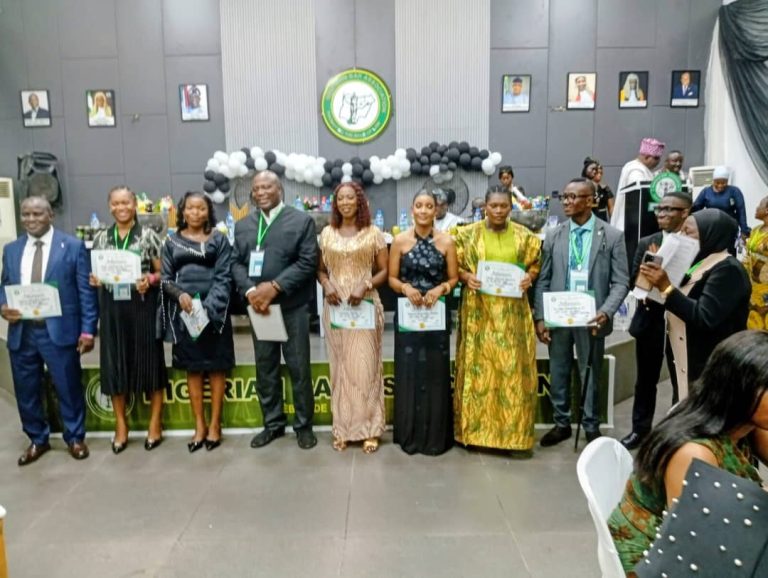
A major highlight of the evening was the awards and recognition segment, during which several distinguished personalities were honoured for their contributions to the legal profession, public service and support for the NBA Ijebu-Ode Branch.
Among those recognised were Ogun State Governor Prince Dapo Abiodun, CON, Deputy Governor Engr. Noimot Salako-Oyedele, the Chief Judge of Ogun State, Chairman of the NBA Ijebu-Ode Branch Government Advisory Committee Chief Wole Okuboyejo, former Minister of State for Health Senator Olorunnimbe Mamora, and Chief Aderibigbe Adedeji, SAN, whose donation of the ultra-modern Bar Centre was widely celebrated as a landmark contribution to the legal community in Ijebu Land.
An emotional moment came when the immediate past Secretary of the branch and newly inaugurated Vice Chairman, Mrs. Elsie O. Olaniyi, received a special recognition award for her outstanding service to the association. The honour was accompanied by a personal token presented by the outgoing chairman, drawing warm applause from members and guests.
The NBA Ijebu-Ode Football Team was also celebrated and presented with a trophy in recognition of its success during the sporting activities organised as part of the Law Week programme.
The dinner and awards ceremony attracted magistrate, past chairmen of the branch, government officials and legal practitioners from within and outside Ogun State.
As the curtains fell on the 2026 Law Week, members expressed optimism that the new administration would consolidate on the achievements of the outgoing leadership and further strengthen the branch’s reputation as a champion of justice, professional excellence, members’ welfare and the rule of law.
A veteran journalist and Executive Director of Media Career Development Network, Mr Lekan Otufodunrin, has urged journalism educators to use practical assignments to help students connect classroom learning with real-life opportunities, following the recognition of outstanding students at the Nigerian Institute of Journalism (NIJ), Lagos.
The media trainer, who is an adjunct lecturer at the institute made the call during the presentation of cash prizes and certificates to Higher National Diploma (HND I) students who excelled in a multimedia digital writing assignment centred on the biography of distinguished NIJ alumna, Mrs Jennifer Okaima Piette.
The assignment which required students to produce engaging multimedia content using information from Mrs Piette’s social media platforms as part of a practical journalism exercise designed to strengthen their reporting, research, writing and digital storytelling skills.
Speaking on the initiative, Otufodunrin said the project was created to bridge the gap between classroom learning and the realities of the media profession by exposing students to practical storytelling while drawing inspiration from the achievements of a successful alumnus.
”I like to teach students with practical examples. Jennifer graduated from this school and has gone on to achieve remarkable success in the United States. The assignment was created to help students relate classroom learning to real-life opportunities while developing their content creation and journalism skills,” he said.
Mrs Piette sponsored cash prizes for the participating groups in recognition of their performance. Group B, represented by Alabi Emmanuel (HND I Journalism), emerged as the overall winner. Group C, represented by Akogun Esther, finished as the first runner-up, while Group A, represented by Olakanye Iyanuoluwa Omobolanle, came second runner-up. Group D, represented by Akinola Israel, also received a consolation cash award.
In addition to the monetary rewards, Mrs Piette offered interested students the opportunity to participate in an e-mentoring programme aimed at equipping them with the skills, guidance and professional exposure needed to stand out in today’s highly competitive media industry.
Otufodunrin, a veteran Nigerian journalist and media career development specialist with more than 35 years of industry experience, encouraged aspiring journalists to continually develop their skills and embrace practical learning opportunities, noting that the evolving media landscape offers limitless opportunities for professionals who are prepared to learn, innovate and adapt.
The multimedia writing assignment forms part of efforts to promote experiential learning by giving students practical exposure to digital journalism and content creation while connecting academic learning with career development.
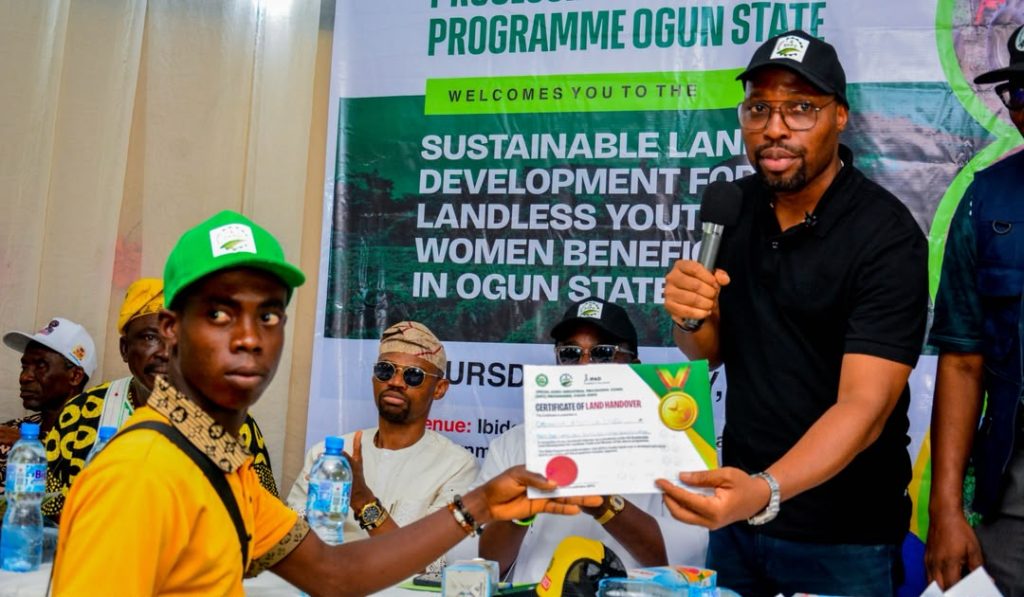
The Executive Chairman of Odogbolu Local Government, in conjunction with the Ogun State Government, representing by Honourable Commissioner for Agriculture and Food Security Hon. Bolu Owotomo in partnership with the International Fund for Agricultural Development (IFAD), has officially handed over 44 hectares of developed farmland to landless youths and women under the Sustainable Land Development for Landless Youths and Women Initiative of the Special Agro-Industrial Processing Zones (SAPZ-IFAD) Programme.
The symbolic handover ceremony, held on Thursday at Ibido-Ogbo in Odogbolu Local Government Area, was performed by Hon. (Dr.) Babatunde Oyetola Diya alongside the Commissioner for Agriculture and Food Security, Hon. Bolu Owotomo. The initiative underscores the Ogun State Government’s commitment to promoting commercial agriculture, creating employment opportunities, improving food security, and empowering rural communities.
The event commenced with a courtesy visit to the Oba-Elect of Ibido-Ogbo, His Royal Majesty, Oba Temitope Oyekunle Oyenuga, Olufemiloye I, Mogoosu of Ibido-Ogbo, where Hon. Diya sought the monarch’s blessings for the successful implementation of the initiative. He described agriculture as the cornerstone of sustainable economic growth and rural prosperity, reaffirming his administration’s commitment to mechanised farming, agribusiness development, youth empowerment, and food security.
Addressing participants, Hon. Diya expressed appreciation to the President of the Federal Republic of Nigeria, His Excellency, President Bola Ahmed Tinubu, GCFR, for prioritising agriculture under the Renewed Hope Agenda. He also commended the Governor of Ogun State, His Excellency, Prince (Dr.) Dapo Abiodun, CON, for his visionary leadership and sustained investment in agriculture, which continue to position Ogun State as a leading destination for agribusiness and food production.
The Chairman further lauded the Commissioner for Agriculture and Food Security, Hon. Bolu Owotomo, for ensuring that Odogbolu Local Government benefited from the SAPZ Programme, noting that the intervention would expand agricultural production, stimulate agribusiness investments, create employment, and improve the livelihoods of rural farmers.
Speaking on the technical implementation of the project, He first appreciated the Federal Government, the State Agricultural Processing Engineer, Engr. Oluwatoyin B. Odejobi, appreciated Governor Dapo Abiodun, Commissioner Bolu Owotomo, and Hon. Diya for their unwavering support towards the successful execution of the project. He encouraged beneficiaries to maximise the opportunity by cultivating their allocated plots responsibly, adopting improved agronomic practices, maintaining soil fertility, and implementing effective weed, pest, and disease management to achieve optimal yields and sustainable incomes.
In their goodwill messages, the Oba-Elect of Ibido-Ogbo and the Member representing Odogbolu State Constituency, Hon. Lukman Adeleye, commended the State Government for the intervention, describing it as a significant step towards increasing food production, creating wealth, and improving rural livelihoods. They appealed for improved access roads to farming communities to facilitate the movement of farm inputs and harvested produce while acknowledging the Governor’s ongoing infrastructural projects across the Local Government.
Also speaking, the Supervisor for Agriculture, Hon. Afuwape Fakoya, appreciated the Governor, the Commissioner, and the Executive Chairman for repositioning agriculture as a catalyst for economic growth in Odogbolu, assuring residents that more developmental projects would soon be delivered.
Former Chairmen of Odogbolu Local Government—Hon. Shittu Olawale, Hon. Obafemi Onakoya, and Alhaji Idris Lawal—also commended Hon. Diya’s leadership, describing his administration as one committed to inclusive governance, agricultural revitalisation, and sustainable community development.
Delivering his keynote address, the Commissioner for Agriculture and Food Security, Hon. Bolu Owotomo, disclosed that 279 hectares of farmland had been developed across six locations under the first phase of the programme. He explained that Ibido-Ogbo received 44 hectares of fully cleared and mechanically prepared farmland for 44 beneficiaries, while Imodi received 10 hectares. Other beneficiary communities include Tata and Eguaa in Yewa North Local Government Area, as well as Agodo and Amu in Obafemi Owode Local Government Area.
The Commissioner further revealed that beneficiaries would receive improved planting materials, herbicides, insecticides, and other agricultural inputs in the form of a matching grant to support successful cultivation.
Performing the symbolic handover, Hon. Owotomo stressed that the allocated farmlands remain government property and are strictly non-transferable. He warned beneficiaries against selling, leasing, or reallocating their plots, urging them instead to utilise the opportunity to improve their livelihoods while contributing to Ogun State’s food security agenda. Responding to concerns over poor access roads to the farm settlement, he assured stakeholders that the matter would be brought to the attention of Governor Dapo Abiodun for necessary intervention.
The Commissioner also appreciated the SAPZ-IFAD Programme, development partners, consultants, contractors, host communities, and other stakeholders whose collaboration ensured the successful delivery of the project.
The Acting State Programme Coordinator of SAPZ, Mr. Ibrahim Busi, commended Hon. Diya for providing an enabling environment for the smooth implementation of the programme and thanked the people of Ibido-Ogbo for their cooperation and support throughout the execution of the project.
The event was attended by the Commissioner for Agriculture and Food Security, Hon. Bolu Owotomo; the Member representing Odogbolu State Constituency, Hon. Lukman Adeleye; Barr. Dapo Oduwole, General Manager, Public-Private Partnership, Ogun State; the Coordinating Director, representing the Permanent Secretary, Ministry of Agriculture and Food Security, Dr. Jolaoso Taiwo; the Acting State Programme Coordinator for SAPZ, Mr. Ibrahim Busi; the State Agricultural Processing Engineer for SAPZ, Engr. Oluwatoyin B. Odejobi; the Vice Chairman of Odogbolu Local Government, Hon. (Princess) Victoria Olusola; the Secretary to the Local Government, Deacon Stanley Olunogun; the Leader of the Legislative Council, Rt. Hon. Adesoye Akeem Tunde; General Manager Public-Private Partnership ODLG, Prince Adeleke Adebajo, Akogun Muyiwa Idowu, APC Odogbolu Party Chairman, Alhaji Abayomi Salisu , Alhaja Allimot Brown, High Chief Balogun Abiodun Fatai, Baale Isanya ogbo. councillors, supervisors, special advisers, traditional rulers, former local government chairmen, community leaders, party leaders, farmers’ associations, women and youth groups, religious leaders, senior government officials, and other distinguished stakeholders from within and outside Ogun State.
Comrade Otudero Seyi Oluwaseun Chief Press Secretary Office of the Executive Chairman Odogbolu Local Government.
The Speaker of Ogun House of Assembly, Oludaisi Elemide has assured that the bill on safe termination of pregnancy currently before lawmakers in the state would undergo rigorous process to ensure that its provisions do not conflict with existing laws of Nigeria and other extant legislations.
Speaker Elemide gave the assurance as Ogun State House of Assembly commenced the second reading of the bill titled: “H.B. No. 036/OG/ 2026-Ogun State Safe Termination of pregnancy law, 2026”, on Tuesday.
Speaking shortly after the members conducted a debate during the second reading of the bill on the floor of the Assembly, the Speaker Elemide noted that the bill which was introduced to “Reduce Maternal Morbidity and Mortality, Promote Safe Motherhood and Reproductive Health Rights and to Establish the Conditions for the Safe Termination of Pregnancy in accordance with Legal Indications, and for Connected Purposes”, was necessary to reduce avoid maternal mortality.
The Ogun Speaker reiterated that the House Committee on Health and other relevant stakeholders would subject the proposed legislation to a thorough scrutiny to ensure that it aligns with the Constitution and other applicable laws of Nigeria, while addressing the policy objectives of the bill without creating redundancy or legal conflicts.
Earlier, while opening the debate on the bill, the sponsor and Chairman, House Committee on Health, Hon. Wahab Haruna, described the proposed legislation as a critical intervention aimed at addressing the persistent challenge of maternal mortality and morbidity in the State.
He explained that the bill sought to establish a clear legal and medical position under which termination of pregnancy might be carried out by qualified medical practitioners in approved health facilities, including where the life of any pregnant woman is at risk.
Aligning with the sponsor’s position, Hon. Babatunde Tella noted that the bill was aimed at promoting safe medical intervention in high-risk pregnancies where termination is medically recommended.
Contributing to the debate, Hon. Lukman Adeleye, stressed the need to adopt globally accepted best practices in reproductive healthcare; saying that the proposed legislation would provide legal and institutional frameworks for a safe pregnancy termination in legally recognised circumstances.
He added that it would protect victims of rape from trauma and contribute to reducing maternal mortality.
On his part, Hon. Oluseun Adesanya and Hon. Yusuf Sheriff alongside other lawmakers supported the fact that the bill would boost access to the required information and medical intervention necessary to protect the women
The bill was subsequently committed to the House Committee on Health for further legislative action.
It was a grand homecoming for Mrs. Kudirat Abiodun Adegunwa Balogun, the APC Deputy Governorship Candidate, as she received a warm and enthusiastic reception from the people of Ososa Community in Odogbolu Local Government.
The impressive turnout reflected the community’s strong confidence in the APC’s vision for purposeful leadership, inclusive governance, and sustainable development.
Joining the Deputy Governorship Candidate were Hon. Omo Iwa, Hon. Lukman Adeleye, Hon. Moshood Adetayo Abubakar, Hon. Atinuke Bello, alongside other APC leaders in Odogbolu Local Government. Their presence highlighted the party’s unity, grassroots strength, and shared commitment to engaging with residents and advancing the APC’s developmental agenda.
Community leaders, party supporters, and residents reaffirmed their unwavering support for the APC, expressing optimism and readiness to work towards a resounding victory in the forthcoming elections. — Daytayo Progressive Movement
The Nigeria Union of Journalists (NUJ), Ogun-East Independent Chapel, has reiterated its commitment to upholding professionalism and eliminating quackery in the media through a capacity-building training programme for journalists across the Ogun-East Senatorial District.
The professional development programme, aimed at strengthening ethical journalism and enhancing media practice, brought together journalists from different media organisations to deepen their knowledge of contemporary journalism and professional standards.
The guest lecturer, veteran journalist, and current State Secretary of the Nigerian Institute of Public Relations (NIPR), Comrade Adekunle Olayeni, delivered a keynote lecture titled “Maintaining Good Journalism in a Troubled Ocean” during a virtual gathering held on Wednesday.
Olayeni is a former Chairman of the Correspondents’ Chapel, former Vice Chairman of the Nigeria Union of Journalists (NUJ), Ogun State Council, former State Correspondent of The Telegraph Newspaper, and currently serves in the Corporate Affairs Division of Olabisi Onabanjo University.
In his presentation, Olayeni provided participants with practical insights into the changing landscape of journalism, emphasising media ethics, professional responsibility, accuracy, and the need for continuous learning in an increasingly competitive information environment.
He stressed the importance of grassroots journalism, effective headline writing, and thorough investigation before publication, noting that credibility remains the greatest asset of every journalist.
He urged practitioners to prioritise factual reporting over speed, saying well-researched stories not only educate the public but also strengthen confidence in the media.
Speaking further on the theme, “Maintaining Good Journalism In A Troubled Ocean,” Olayeni described today’s media environment as one challenged by misinformation, disinformation, economic pressures and the race to break news.
According to him, these realities make it even more imperative for journalists to remain committed to truth, fairness, balance, and verification in every report.
He also encouraged journalists to embrace regular training and adapt to emerging digital technologies without compromising the ethical principles of the profession. He noted that while technology has transformed news gathering and dissemination, the fundamental values of accuracy, objectivity, accountability, and public interest must remain the guiding principles of journalism.
The veteran journalist further advised practitioners to see themselves as custodians of public trust, stressing that responsible journalism contributes significantly to national development, good governance, and an informed society.
Olayeni urged media professionals to resist sensationalism and uphold the integrity of the profession despite prevailing challenges within the media industry.
Speaking on behalf of the chapel, the leadership led by Chairman, Comrade Oluseun Oduneye, alongside the Vice Chairman, Comrade Charles Adegbite, Secretary, Comrade Funmilayo Suleodu Adewoju and other members, expressed appreciation to the guest lecturer for sharing his wealth of experience and enriching members with valuable professional knowledge.
The chapel noted that the training forms part of its ongoing efforts to promote ethical journalism, discourage unprofessional practices, and build the capacity of journalists within the Ogun-East Senatorial District.
It reaffirmed its commitment to organising similar programmes that will continue to enhance competence, professionalism, and excellence in media practice.
The training also underscored the importance of continuous professional development as participants engaged in discussions on ethical reporting, newsroom challenges, and strategies for sustaining quality journalism in an evolving media landscape.
The 2026 FIFA World Cup has witnessed a wave of historic achievements, with football icons and national teams rewriting the record books through remarkable performances.
During the group stage and Round of 32, stars including Lionel Messi, Cristiano Ronaldo, and Harry Kane further cemented their legendary status by setting new milestones, with several feats earning recognition in the record books.
According to a report released by FIFA after the group stage, the tournament had already become the biggest in World Cup history, drawing a record 4.64 million fans across 72 matches and averaging three goals per game.Below are some of the major records set during the group stage:
Individual records
Lionel Messi (Argentina) became the first player to score in seven consecutive World Cup matches.
Messi also became the tournament’s all-time leading scorer with 19 goals.
At 38 years, 357 days, Messi became the oldest player to score a World Cup hat-trick, surpassing Cristiano Ronaldo’s previous record.
Cristiano Ronaldo became Portugal’s all-time leading World Cup scorer with 10 goals, overtaking Eusébio.
Ronaldo also became the only player to score in the most World Cup editions (6).
Kylian Mbappe became France and Europe’s all-time leading World Cup scorer with 18 goals, one below Messi as of June 3, 2026.
Harry Kane became England’s all-time leading World Cup scorer with 11 goals, surpassing Gary Lineker.
Ismael Saibari (Morocco) became the first African player to score in three consecutive World Cup matches.
Kevin Pina scored Cabo Verde’s first-ever World Cup goal.
Team records
A record nine African teams progressed to the knockout stage, surpassing the previous best of two achieved in 2014 and 2022.
Bosnia and Herzegovina, Cabo Verde, Canada, DR Congo, Côte d’Ivoire, Egypt and South Africa reached the knockout stage for the first time.
Cabo Verde became the only tournament debutant to remain unbeaten in the group stage.
Canada’s 6-0 victory over Qatar marked the first time a CONCACAF nation scored more than four goals in a World Cup match.
Japan’s 4-0 win over Tunisia became the 1,000th match in FIFA World Cup history and the biggest victory by an Asian team at the tournament.
Mexico won four consecutive World Cup matches for the first time, extending its record among CONCACAF nations.
Senegal became the first African team to score five goals in a World Cup match.
The United States’ 4-1 victory over Paraguay was its first-ever four-goal haul in a World Cup game.
Coaching records
Dick Advocaat (Curaçao) became the oldest coach in World Cup history at 78 years, 271 days.
Hugo Broos (South Africa) became the oldest coach to win a World Cup match at 74 years, 75 days, breaking the record set earlier in the tournament by Carlos Queiroz.
Goalkeeping record
Spain goalkeeper Unai Simón set a new Guinness World Record for the longest World Cup clean-sheet streak, going 519 minutes without conceding a goal, eclipsing Walter Zenga’s 518-minute mark set in 1990.
Appeal Court Reverses Ruling Allowing Hijab at UI International School The Court of Appeal sitting in Ibadan has set aside the judgment of the Oyo State High Court that permitted Muslim students of the International School, University of Ibadan (ISI), to wear hijab as part of the school’s approved uniform.
In a split judgment delivered on Friday, the three-member appellate panel held, by a majority decision of two to one, that the Supreme Court’s decision permitting the use of hijab applies only to public schools and not private institutions such as the International School, University of Ibadan.
The appellate court set aside the earlier judgment delivered by Justice Moshood Ishola of the Oyo State High Court, which had held that the school’s ban on hijab violated the affected students’ constitutional rights to freedom of religion and freedom from discrimination.
The suit was instituted by 11 students with the support of the Muslim Rights Concern.
Delivering the lead majority judgment, Justice Biobele Georgewill, with Justice K.I. Amadi concurring, held that “ISI is a private school, not a public institution, thereby overturned the earlier judgment on the matter.”
He submitted that the right to religion is a personal right that can be waived.
He added, “The students had waived that right by signing an undertaking to obey ISI’s rules and regulations, including its dress code.
“In public schools, you can wear hijab on school uniforms based on the judgment of the Supreme Court, but the Supreme Court is yet to make any decision on the use of hijab in private schools.”
However, Justice Fadawu Umar dissented, holding that the appeal lacked merit and ought to be dismissed.
The dispute over the use of hijab at the International School, University of Ibadan, began in 2018 after some Muslim students challenged the school’s prohibition of hijab as part of its uniform policy.
In 2022, the Oyo State High Court ruled in favour of the students, holding that the restriction violated their constitutional rights.
Dissatisfied with the judgment, the school authorities appealed the decision, leading to Friday’s ruling by the Court of Appeal.
The Federal Government on Tuesday announced plans to abolish the long-standing policy separating junior secondary schools from senior secondary schools after revealing that more than 20 million pupils are dropping out before reaching senior secondary education.
Minister of Education, Dr Tunji Alausa, said the policy, introduced to separate junior and senior secondary education into distinct administrative structures, had failed to achieve its objective and had instead worsened access to education across the country.
Alausa disclosed this in Abuja during the inauguration of the Universal Basic Education Commission Ministerial Implementation and Monitoring Committee.
He said the decision followed evidence showing a huge gap between the number of primary schools and junior secondary schools nationwide, leaving millions of children unable to progress in their education.
We have 20 million dropouts from primary school to junior secondary school. Where are those students? We also found we have 80,000 public primary schools and only about 15,000 junior secondary schools. That’s a one-to-eight ratio,” he said.
According to him, the shortage of junior secondary schools resulted in severe overcrowding while many senior secondary schools remained underutilised.
The JSS-SSS structure was introduced in 1982 as part of the National Policy on Education (often referred to as the 6-3-3-4 system), which was initially formulated in 1977.
The minister said, “This disarticulation policy has failed. We will phase it out. We can’t create positions because we want to create a director-level position for people while we harm our education system. It’s about doing what is best for every Nigerian child,” he added.Alausa said the proposal to scrap the policy would be presented at the next meeting of the National Council on Education for approval.
The minister said the reform forms part of broader efforts to improve access to education and raise learning outcomes.“This government will not fail. We are fixing it,” he said.
The announcement came as the minister raised fresh concerns over Nigeria’s deepening learning crisis, revealing that about three out of every four children at the basic education level are unable to read and understand an age-appropriate text by the age of 10.
Speaking later at the Federal Ministry of Education and Universal Basic Education Commission Roundtable Convening Meeting on Digital Resources Available to Achieve Learning Outcomes, Alausa described the country’s learning poverty rate as alarming.“Learning poverty means that by the age of 10, a child cannot read and understand an age-appropriate text.
In Nigeria today, three out of every four children are learning poor. That is simply unacceptable,” Alausa added.
He said the statistics underscored the need to urgently transform teaching and learning through digital technology.
“We don’t have a choice. We have to use technology. It is no longer feasible to continue to do things manually. Digital learning is the future, and we must deploy it to every part of the country, including the most rural communities,” he said.
The minister urged state governments to maximise the use of digital learning platforms already developed by the Federal Government, including the Nigeria Learning Passport, Inspire, Ignite, EduRevamp, E-Learn, the Greenfield Learning Management System and virtual classroom solutions.
According to him, the platforms provide curriculum-aligned lessons taught by some of the country’s best teachers and can help address shortages of qualified teachers in subjects such as Mathematics, English Language, Physics and Chemistry.
He explained that schools without subject teachers could connect learners to live or recorded virtual classes while allowing students to interact with teachers online.
Despite the investments, Alausa lamented that adoption of the platforms remained very low.
He disclosed that although the Nigeria Learning Passport currently has about 2.3 million users, the figure represents only a fraction of Nigeria’s estimated 67 million learners in primary, junior secondary and senior secondary schools.
“This is still extremely low. We have invested significant resources in these platforms. If they are not used, then it becomes a wasted investment. We cannot continue to suffer in the midst of plenty,” the minister added.
He commended the United Nations Children’s Fund for supporting the development of the Nigeria Learning Passport, noting that it sustained learning during the coronavirus pandemic and later supported children affected by insecurity and school closures.
The minister also inaugurated a ministerial implementation and monitoring committee chaired by Prof Rashid Aderinoye to oversee Universal Basic Education Commission-funded smart schools, bilingual schools and alternative schools across the country.
The committee is expected to ensure that the projects are completed, handed over to state governments and opened for learning.
Alausa lamented that despite huge public investment, many of the schools remain uncompleted or have yet to admit learners, describing the situation as an unacceptable waste of public resources.
Earlier, the Executive Secretary of the Universal Basic Education Commission, Dr Aisha Garba, said technology had become indispensable for building an inclusive, resilient and future-ready education system.
She said the commission had established digital learning centres in primary and junior secondary schools, deployed smart interactive boards, strengthened education data systems and introduced digital monitoring and evaluation platforms.
Garba added that the commission had inaugurated Digital Champions to drive digital transformation and support state governments in implementing education technology initiatives.
According to her, technology alone cannot transform education without effective coordination, strong partnerships, sustained capacity building and the willingness of stakeholders to embrace innovation.
She expressed confidence that the collaboration between the Federal Ministry of Education, the Universal Basic Education Commission, state governments and development partners would accelerate the adoption of digital learning resources and improve learning outcomes nationwide.
Nigeria has one of the largest populations of out-of-school children in the world, with millions of school-age children—particularly in rural, poor and conflict-affected communities still unable to access or complete basic education.
Education experts have long argued that weak transition rates from primary to junior secondary school, inadequate infrastructure, teacher shortages and insecurity continue to fuel the crisis.
However, education stakeholders have repeatedly criticised the policy for creating administrative bottlenecks and limiting the progression of pupils, especially in areas where junior secondary schools are insufficient.