Home Blog Page 11

Clean Water Comes at a High Cost in Oke-Popo, Lagos

In Oke-Popo, a densely populated community on Lagos Island, access to clean water has become a daily struggle and an unaffordable necessity for many residents. AYOOLA OLASUPO reports that families rely on costly water vendors and irregular borehole sources, many of which yield salty and unsafe water.

In the heart of Lagos Island, where the streets rarely sleep, residents of the Oke-Popo community now wake each day to the uncertainty of where their next bucket of water will come from.

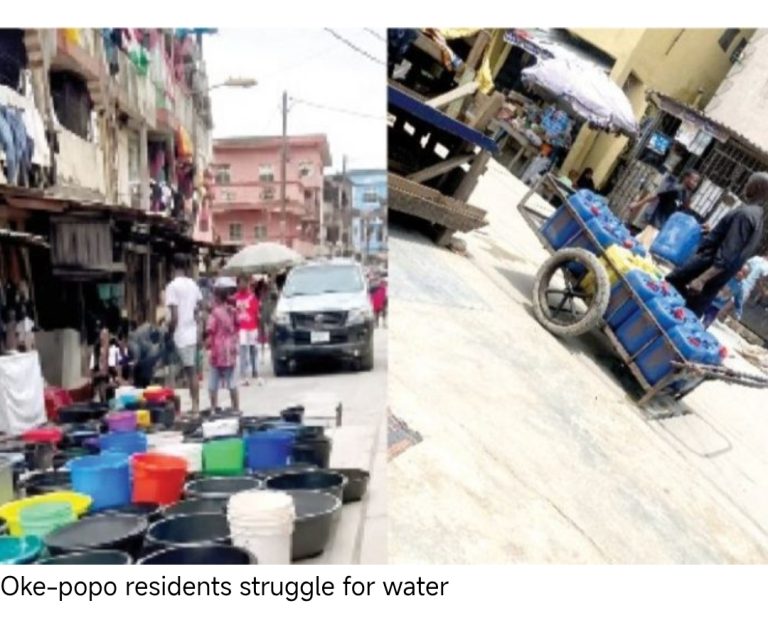
From different corners of the community on a Wednesday afternoon, men in singlets, women in wrappers, and children carrying heavy kegs and buckets filled the streets in search of water.

Within minutes, a queue formed at a place where one of their routine water supplier

For many households, access to clean water is not guaranteed. There are no functional boreholes, piped water is virtually absent, and the few boreholes available often yield salty, unsafe water unsuitable for drinking or cooking.

Muhammed Ishola, one of the residents, stood in front of his two-storey residence negotiating the price of jerry cans filled with water, his frustration evident.

“The challenge we are facing here is water. Although there are many boreholes, we rarely get water from them,” he lamented.

Ishola described the situation as a long-standing problem affecting all households in the community.

“This is a general issue on Lagos Island. We don’t have access to water and electricity. When we try to fetch water, what we get is salty. Sometimes, it comes just once or twice in a month, and many of the boreholes are no longer working,” he added.

According to him, the irregular supply has rendered many boreholes dysfunctional, while privately sourced water is often discoloured and unfit for use.

As a result, residents rely heavily on water vendors who move around the neighbourhood with wheelbarrows loaded with kegs.

Ishola further explained that the cost of water depends on residents’ floor levels, revealing that those on the ground floor pay between N1,500 and N2,000 for about 14 kegs, while those on upper floors spend between N2,500 and N4,000.

“The way it is structured is that each building has its own borehole, but most are no longer functional. We used to buy water from Hausa boys who hawk it in wheelbarrows. For those downstairs, 14 kegs cost about N1,500 to N2,000, while those upstairs pay up to N4,000. It is taking a huge toll on my family’s weekly expenses,” he said.

Water now a luxury for residents

Another resident, Oluwaseyi Bello, recalled a time when tap water was readily available and even sold locally as “iced water.”

The man, who is also a construction supervisor, said the situation has deteriorated significantly over the years, with boreholes now producing contaminated water that sometimes develops an oily layer within minutes, making it unsuitable for drinking or cooking.

“We no longer have good quality water in this community. Sometimes, when we fetch it, we see oil-like substances on it within minutes. We now use sachet water for cooking and drinking, and we spend a lot buying water from vendors who bring it from Oke Sura or Obalende,” Bello said.

He added that the lack of electricity worsens the situation, especially for construction workers who also depend on purchased water for their daily work.

“We don’t even have electricity, not to mention potable water. Even for construction work, we buy water. Sometimes, we are cheated with salty water before we realise. We want government intervention,” he appealed.

New Era for the Ijebu Fashion Festival as Organisers Unveil Broader Cultural Vision


The organisers of the Ijebu Fashion Festival have officially announced a major transition in what is being described as a bold and strategic step toward building a broader, more inclusive, and impactful creative and cultural movement across Ogun State.

Over the years, the Ijebu Fashion Festival has established itself as one of the foremost platforms dedicated to empowering fashion entrepreneurs, local creatives, and emerging talents through a series of transformative initiatives and events.

Through flagship programmes such as the Ijebu Fashion Show, Ijebu Masterclass, Miss Ijebu, Ijebu Awards and the Ijebu Trade Fair, the Ijebu Fashion Festival has empowered thousands of participants while creating opportunities for visibility, enterprise development, networking, and cultural expression.

Beyond fashion and entertainment, the Ijebu Fashion Festival has also distinguished itself through its commitment to sustainable empowerment by providing non-refundable grants to entrepreneurs and facilitating business training and certification through ICSS programmes aimed at equipping creatives and business owners with practical entrepreneurial skills and long-term business capacity.

According to the organisers, the transition marks a significant evolution for the Ijebu Fashion Festival as it expands beyond being an ethnic-based initiative into a broader state-focused cultural and creative platform designed to showcase the diversity, talent, innovation, and economic potential across Ogun State.

The new direction is expected to create wider opportunities for collaboration among creatives, entrepreneurs, cultural stakeholders, industry professionals, and young talents from different parts of the state while positioning Ogun State more prominently within Nigeria’s growing fashion, tourism, and creative economy.

Speaking on the development, Convener Mrs Maraiyesa Ayokunle Egwunyenga described the transition of the Ijebu Fashion Festival as more than a rebranding effort, noting that it represents the growth of a vision that has evolved beyond regional boundaries.

“The Ijebu Fashion Festival has always represented more than fashion alone. Over the years, we have witnessed how creativity can empower people, preserve culture, stimulate enterprise, and create opportunities for young talents. This transition reflects our commitment to building a larger platform that will connect culture, creativity, enterprise, and community development on a broader scale.”

She further explained that the next phase of the Ijebu Fashion Festival will introduce wider collaborations, deeper community engagement, expanded industry participation, youth-focused initiatives, and greater opportunities for economic growth and creative exposure.

Industry observers have described the evolution of the Ijebu Fashion Festival as a strategic move capable of redefining cultural and fashion engagement within Ogun State, especially at a time when creative industries are increasingly becoming major drivers of tourism, innovation, youth employment, and economic development across Africa.

As anticipation continues to build, followers and stakeholders of the Ijebu Fashion Festival are expected to witness a new era marked by broader participation, elevated experiences, stronger partnerships, and a renewed commitment to celebrating creativity, culture, enterprise, and excellence on a much larger scale.

With this transition, the Ijebu Fashion Festival is not merely evolving as an event, but emerging as a growing cultural movement positioned for greater regional relevance, statewide impact, and long-term significance within Nigeria’s creative landscape.

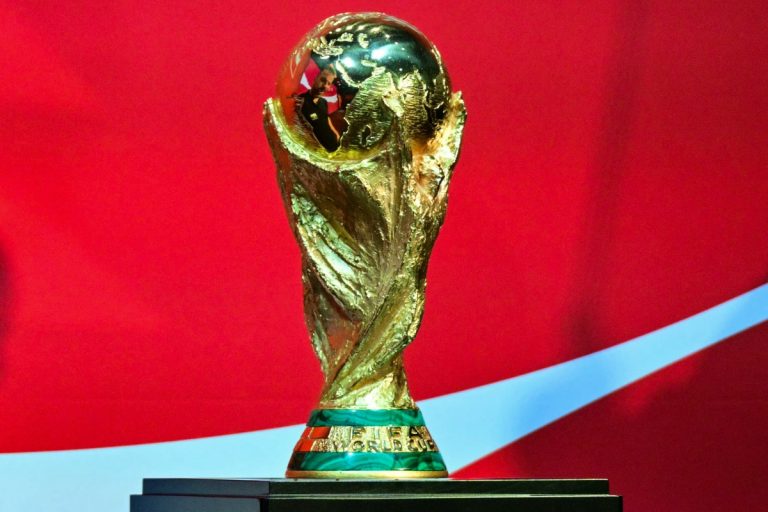
Mbappe, Haaland and Other Top Stars Gear Up for World Cup Spotlight

0

Form and fitness concerns are hanging over some of football’s biggest names just three weeks before the World Cup kicks off.

AFP sports looks at five of the stars who must shoulder the burden of their nations’ expectation in the first-ever 48-team finals spread across the United States, Mexico and Canada:

Kylian Mbappe (France)

Mbappe could become the all-time top goalscorer in World Cup history over the next few weeks, but will cross the Atlantic after a troubled time at Real Madrid.

The 27-year-old is yet to win a major trophy in two seasons at the Spanish giants despite his prolific goalscoring record.

Mbappe’s commitment has been questioned after he went on holiday while nursing a hamstring injury towards the end of the season.

A change of scenery on the international stage could be just what he needs as he aims to write more history on the global stage.

Mbappe took the tournament by storm as a teenager in France’s 2018 World Cup win. He plundered another eight goals, including a hat-trick in the final, as Les Bleus missed out on penalties to Argentina four years ago.

He needs just four more to match Miroslav Klose’s record of 16 World Cup goals.

Erling Haaland (Norway)

Haaland finally gets his first taste of a major international tournament after ending Norway’s 28-year wait to reach the World Cup.

The Manchester City striker struck 16 times in eight games during Norway’s flawless qualifying campaign that included two thrashings of Italy.

That took his tally to a remarkable 55 goals in 49 international appearances.

Haaland is the poster boy for a golden generation of Norwegian players, including Arsenal captain Martin Odegaard, that have been tipped as dark horses.

But Norway will need their star striker in top form after being handed a tough draw alongside France and African champions Senegal in Group I.

Vinicius Junior (Brazil)

Neymar’s return to the Brazil squad has caught the imagination, but it is Vincius’ performance that will likely determine whether Carlo Ancelotti’s men end up with a sixth star on the famous yellow jersey.

He and Mbappe have had to share the spotlight in Madrid, but the World Cup gives Vinicius the chance to become a national hero in Brazil and win the Ballon d’Or he craves.

Vinicius and his club team-mates famously boycotted the ceremony after he was overlooked for Manchester City’s Rodri despite scoring in the Champions League final two years ago.

But his record for Brazil is patchy. He scored just once in the World Cup four years ago and has only eight goals in 47 caps overall.

Harry Kane (England)

England’s captain and all-time record goalscorer enters probably his last shot at World Cup glory off the back of a stunning season for Bayern Munich.

Kane scored 58 goals in 50 games as Bayern romped to the Bundesliga title and narrowly missed out on the Champions League final.

At international level he has spearheaded the rise of the Three Lions to serial contenders, but is yet to end his nation’s 60-year wait to win a major tournament.

Kane has often been hampered physically at international tournaments, exhausted by his exertions during the club season.

However, this time his minutes have been managed by Bayern for months as they prioritised a deep run in the Champions League, with the Bundesliga long since won.

Lamine Yamal (Spain)

The breakout star of Spain’s Euro 2024 triumph, Yamal’s hopes of taking the world by storm will depend on his recovery from a hamstring injury.

The 18-year-old has not featured since suffering the injury for Barcelona on April 22 and could reportedly miss Spain’s first two group games against Cape Verde and Saudi Arabia.

After a slow start to the season, Yamal had been in blistering form prior to his injury, scoring 24 goals in all as Barca cruised to a second consecutive La Liga title.

Spain will be confident of negotiating the early stages of the tournament before unleashing the player many regard as the best in the world for the latter stages.

NDLEA Raises Alarm Over Rising Drug Abuse in Nigerian Communities

0


Nigeria’s worsening drug abuse problem is no longer hidden in crime statistics or security reports, it is now destroying lives in homes, schools and communities across the country, the Chairman of the National Drug Law Enforcement Agency (NDLEA), retired Brigadier-General Buba Marwa, has warned.

Speaking in Abuja on Monday at the opening of a two-day National Drug Control Master Plan (NDCMP) Consultative Forum, Marwa said the country faces a rapidly evolving drug threat driven by rising addiction, synthetic substances and online trafficking networks.

His warning comes amid growing concerns over substance abuse among young Nigerians and projections by the United Nations Office on Drugs and Crime (UNODC) that drug use across Africa could increase by 40% by 2030.

The drug problem is not an abstract concept but a daily reality in homes, schools and communities,” Marwa told delegates at the forum.

We are here not just as policy-makers and experts, but as parents, citizens and guardians of the next generation.”

The NDLEA chairman said Nigeria’s drug landscape is becoming increasingly dangerous due to the spread of synthetic drugs, abuse of prescription medication, poly-drug use and the emergence of new psychoactive substances.

He also warned that traffickers are increasingly using encrypted digital platforms and dark-web operations to expand the illicit drug trade.

“As Africa’s most populous nation and largest economy, Nigeria cannot afford to be a passive observer,” he said.

“The risks to our youth, our workforce and our national security are too high.”

Marwa said West Africa remains a major transit route for cocaine trafficking between Latin America and Europe, citing recent reports by the Global Initiative Against Transnational Organised Crime (GI-TOC).

Despite what he described as significant progress made by the NDLEA over the last five years, he said the country must confront the “sobering reality” that the drug crisis continues to mutate and spread.

The consultative forum, he explained, is expected to shape Nigeria’s National Drug Control Master Plan for 2026–2030 — a strategy designed to strengthen prevention, enforcement, rehabilitation and community-based intervention.

Among the proposed measures are alternative livelihood programmes aimed at addressing the socio-economic conditions that push vulnerable people into the drug trade.

The plan also seeks to disrupt trafficking networks through financial intelligence operations targeting the profits generated by illicit drugs.

The Country Representative of the UN Office on Drugs and Crime (UNODC), Cheikh Toure, said Nigeria’s drug control strategy would fail without stronger grassroots participation.

In a country with 36 states and 774 local government areas, he said, local communities must become central to prevention and rehabilitation efforts.

“State and local governments must take ownership of the response by providing funding, integrating drug control priorities into development plans and ensuring services reach grassroots communities,” Toure said.

He also called for greater involvement of young people and women, describing them as both vulnerable groups and key partners in combating substance abuse.

Nigeria’s Minister of State for Education, Prof Suwaiba Ahmad, said schools and families are increasingly witnessing the effects of addiction among young people.

She urged authorities to adopt a multi-sector approach involving education, healthcare, law enforcement and community support systems.

“Such collaboration is essential to addressing both the root causes and consequences of substance abuse in our society,” she said.

The forum is expected to produce the final draft of Nigeria’s new drug control roadmap, which officials say will guide the country’s response to drug abuse and trafficking over the next five years

Ojude Oba Organisers Unveil 2026 Commemorative Medallion, Reaffirm Festival’s Cultural Legacy

0

Ojude Oba Organisers Unveil 2026 Commemorative Medallion, Reaffirm Festival’s Cultural Legacy

  • …corporate sponsors renew support as organisers insist festival will thrive beyond late Awujale’s reign

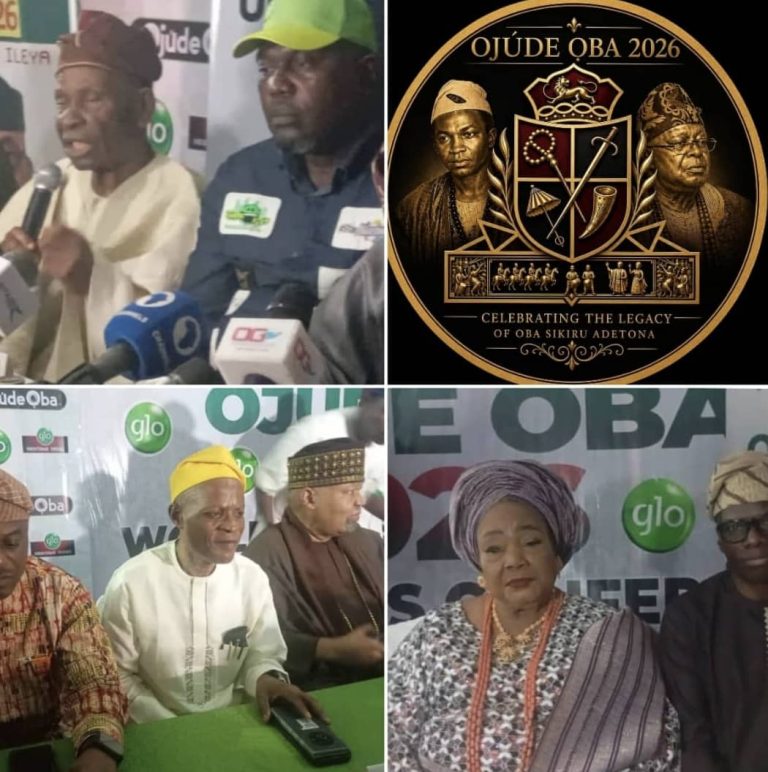
The organisers of the globally celebrated Ojude Oba Festival have officially unveiled the 2026 commemorative medallion logo while reaffirming that the cultural festival will continue to flourish despite the transition of the late Awujale of Ijebuland, Oba Sikiru Kayode Adetona.

The unveiling took place during the 2026 Ojude Oba World Press Conference held at the Heritage Hall of the Awujale Palace, Ijebu-Ode, Ogun State, where traditional leaders, government officials, corporate organisations, members of the diplomatic community and cultural stakeholders gathered to herald preparations for the 2026 edition of the festival.

Speaking during the conference, the Baagbimo of Ijebuland and Coordinator of the Ojude Oba Festival Organising Committee, Chief Prof. Fassy Adetokunboh Yusuf, described Ojude Oba as a timeless symbol of unity, religious harmony and cultural pride among the Ijebu people.

Prof. Yusuf said the festival has evolved into one of Africa’s most respected cultural celebrations and stressed that concerns surrounding its continuity following the demise of the late Awujale had been laid to rest.

According to him, the late monarch had expressly directed during his lifetime that the festival should never be suspended because of his passing or any royal interregnum.

He disclosed that the 2026 edition would hold under the theme: “Ojude Oba 2026: Celebrating the Legacy of Oba Sikiru Adetona.”

The official commemorative medallion logo for the 2026 edition was unveiled by Otunba Giwa Ayodeji Osibogun, Chairman of the Communications, Music and Sound Sub-Committee of the festival.

Osibogun described the medallion as a powerful symbol of heritage, royalty, prestige and the enduring cultural identity of the Ijebu people.

He explained that the medallion captures the majesty of the Awujale institution, the unity of the Regberegbe age-grade groups and the vibrancy of Ijebu culture, especially the globally recognised horse-riding tradition associated with the festival.

“The horse riders represented in this medallion are symbolic of courage, honour, royalty, tradition and the warrior heritage of our people,” he said.

He added that the emblem represents “history preserved in visual form” and disclosed that the commemorative identity would feature across media campaigns, official merchandise, souvenirs, digital platforms, sponsor materials and archival records for the 2026 festival.

Also speaking at the event, Ogun State Commissioner for Culture and Tourism, Hon. Sesan Fagbayi, described Ojude Oba as a major tourism and cultural asset capable of driving economic growth, tourism development and cultural diplomacy for Ogun State.

Fagbayi reiterated the state government’s commitment to supporting the festival and promoting Ogun State as a major tourism destination through its cultural heritage assets, including Olumo Rock, Yemọji Natural Swimming Pool, Bilikisu Sungbo Tourist Centre and the Ojude Living and Historical Museum.

Globacom also reaffirmed its commitment as one of the principal sponsors of the festival, describing Ojude Oba as one of Africa’s foremost cultural celebrations and a major platform for preserving Nigerian heritage and tradition.

The telecommunications company stated that its long-standing support for the festival aligns with its broader vision of promoting indigenous culture, strengthening communities and sustaining institutions that unite Nigerians across generations.

Similarly, Nigerian Breweries Plc reaffirmed its commitment to the festival, pledging continued sponsorship after more than two decades of partnership.

A representative of the company, speaking on behalf of Goldberg